Dior
- Item
- Mukesh Embroidered Coat
- Year
- 2024
- Retail
- ₹1.7 Cr≈ $204,819
- Spin
- "Hand-finished metallic embroidery"
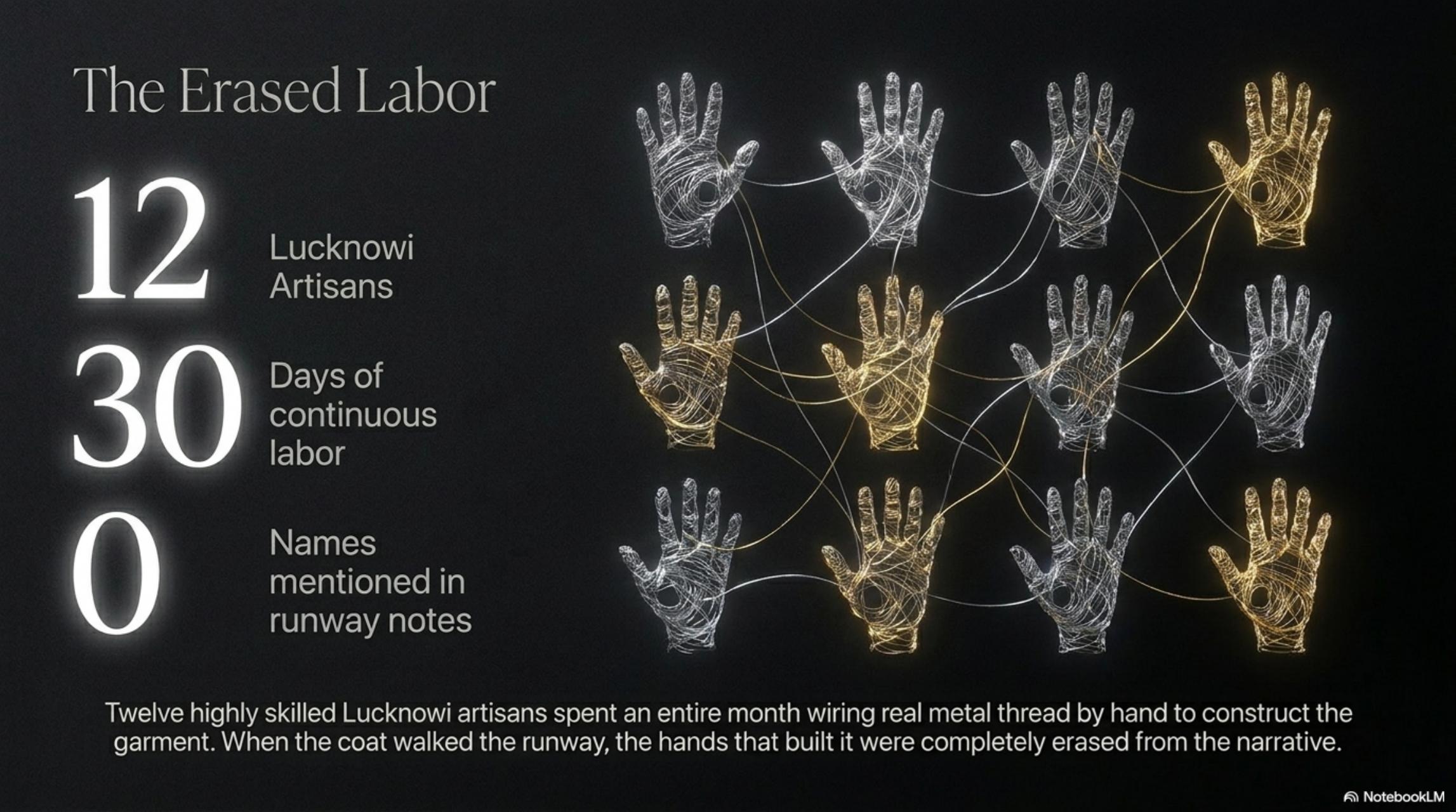
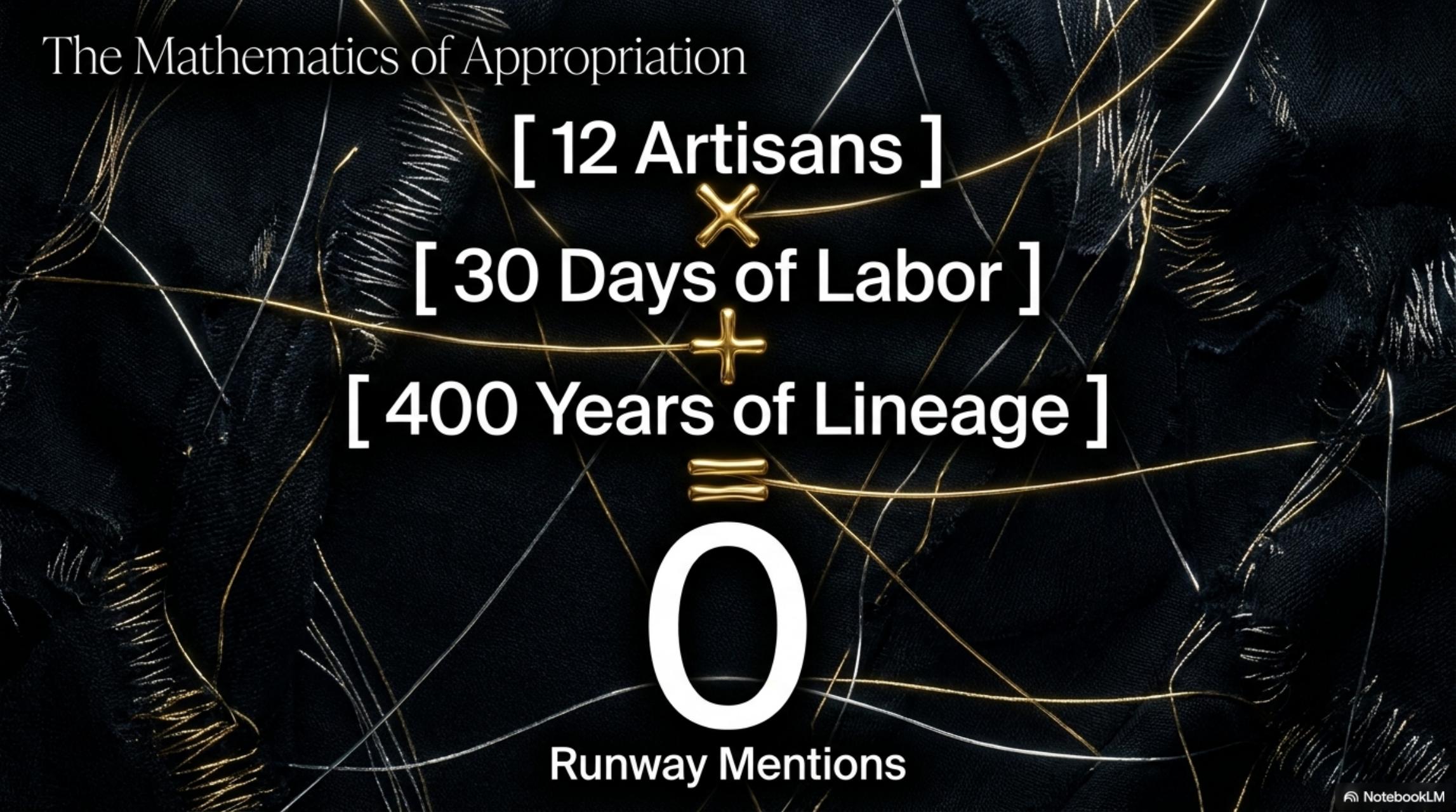
In 2024, a luxury brand featured a coat with 'hand-finished metallic embroidery,' retailing it for a substantial price. While twelve Lucknowi artisans spent a month creating the intricate Mukesh work, the brand's runway notes failed to mention their names or acknowledge the 400-year lineage of this traditional Indian craft. The item was marketed globally without crediting its true origin or the skilled practitioners behind it.
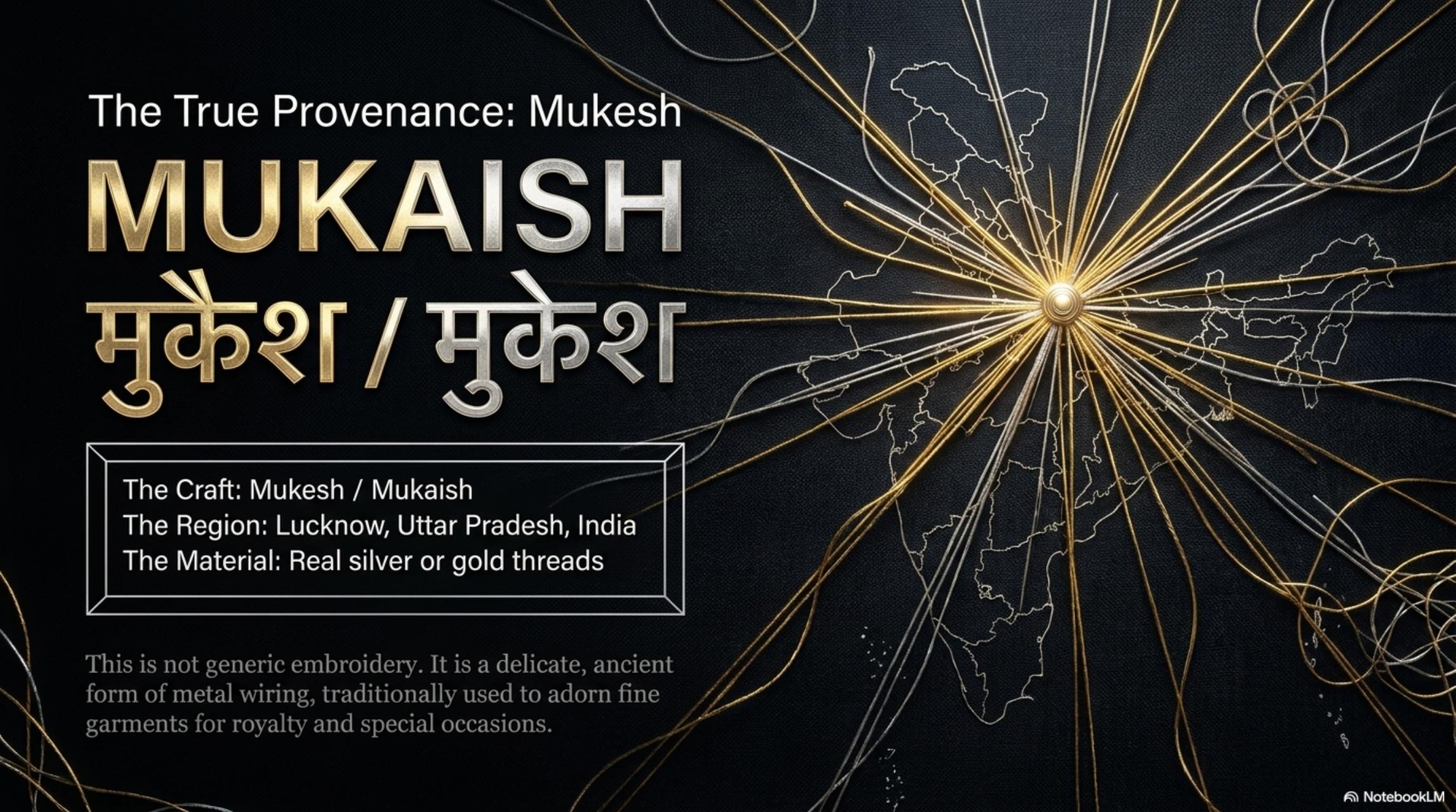
मुकैश / मुकेश
Mukaish (Mukesh)
- Region
- Lucknow, Uttar Pradesh
- True Value
- Uncredited
- Category
- 01 · High Fashion
Mukesh, or Mukaish, is a delicate form of metal embroidery originating from Lucknow, Uttar Pradesh. For centuries, skilled artisans have meticulously hand-wiring real metal threads onto fabric, creating intricate patterns. This labor-intensive technique, often passed down through generations, is a significant part of the region's textile heritage, celebrated for its subtle shimmer and detailed craftsmanship.
FX reference: 1 USD ≈ ₹83 — for comparison only
The Story
In 2024, Dior unveiled a coat featuring intricate metallic embroidery, priced at a staggering ₹1.7 Crore. The luxury brand marketed the piece with a generic description of "hand-finished metallic embroidery," failing to acknowledge the specific craft or its origins. This high-value item was showcased globally, raising questions about ethical sourcing and cultural recognition.
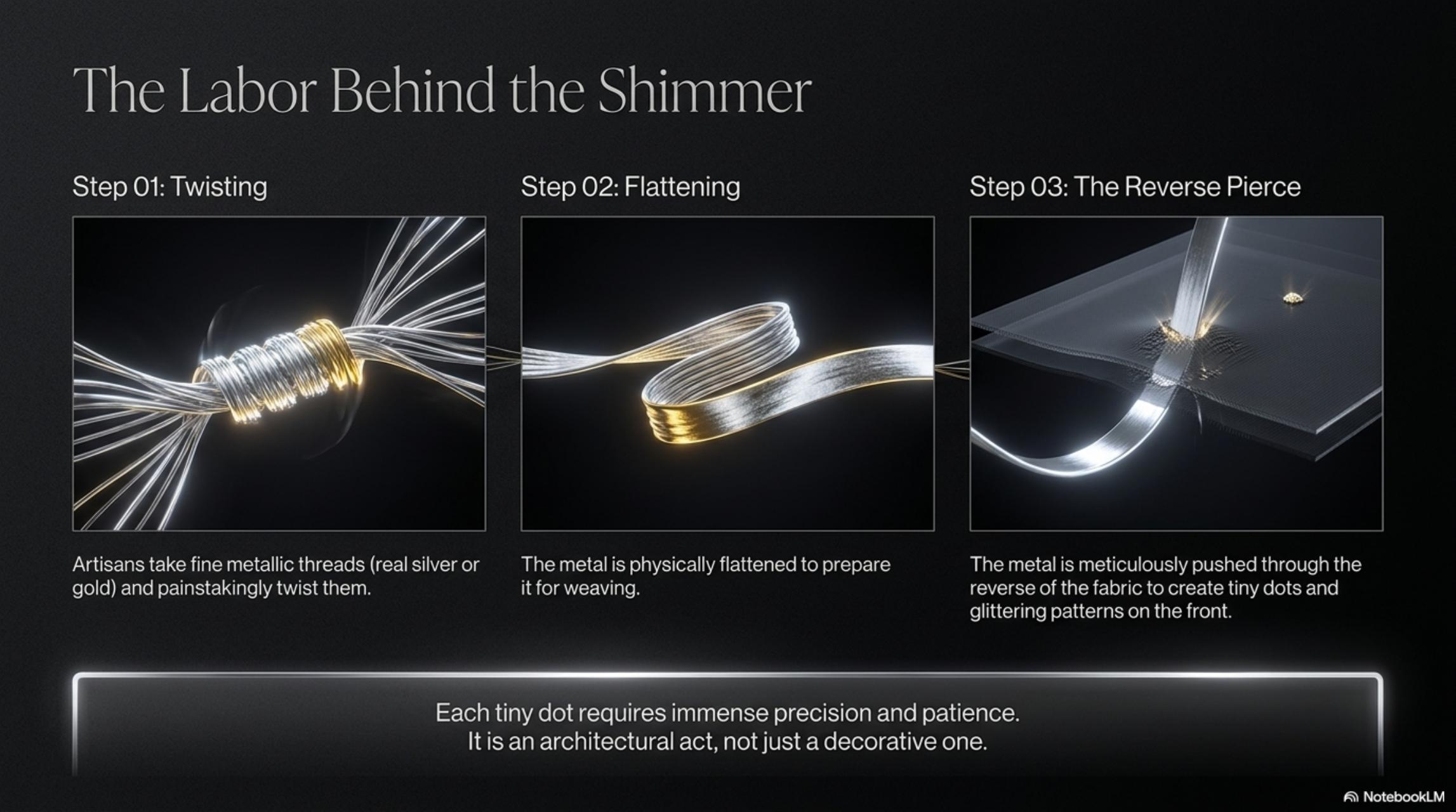
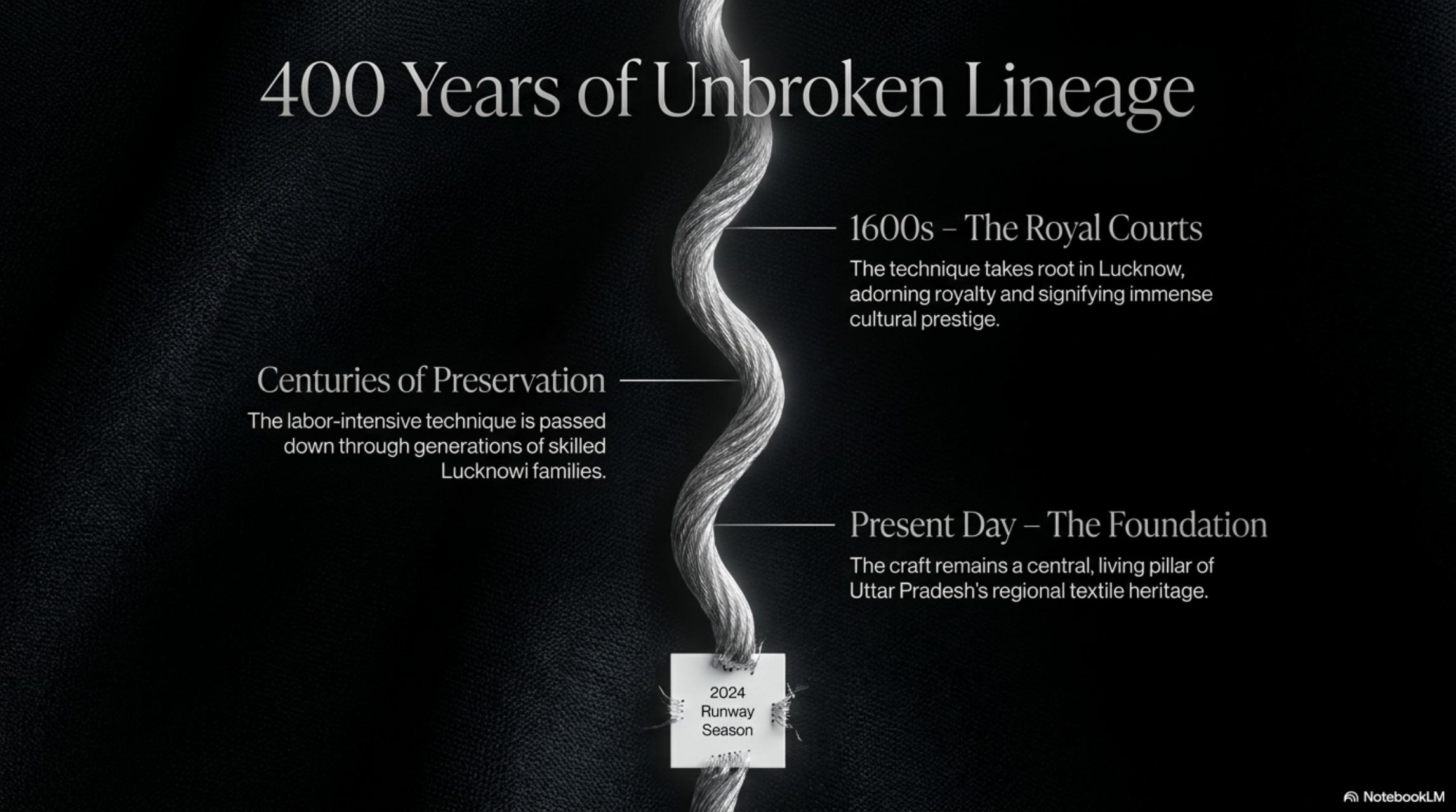
The embroidery on the Dior coat is Mukesh (also known as Mukaish), a delicate and ancient craft originating from Lucknow, Uttar Pradesh, India. This technique involves twisting and flattening fine metallic threads, often real silver or gold, and then meticulously pushing them through the reverse of the fabric to create glittering patterns. For over 400 years, generations of skilled Lucknowi artisans have perfected this art, traditionally adorning fine garments for royalty and special occasions, with each tiny dot or pattern requiring immense precision and patience.
The appropriation was brought to light by cultural commentators and craft advocates who noted the absence of proper credit for the Mukesh technique. Observers pointed out that while twelve Lucknowi artisans spent a month wiring real metal thread by hand for the coat, Dior's runway notes made no mention of their names, the specific craft, or its four-century lineage. The omission sparked public discussion about the lack of recognition for the creators and the cultural heritage behind such high-value luxury items.
Twelve Lucknowi artisans spent a month wiring real metal thread by hand. The runway notes mentioned neither their names nor the technique's 400-year lineage.
The Dossier
A visual breakdown of the appropriation — the luxury spin, the artisanal reality, and the full evidence deck.