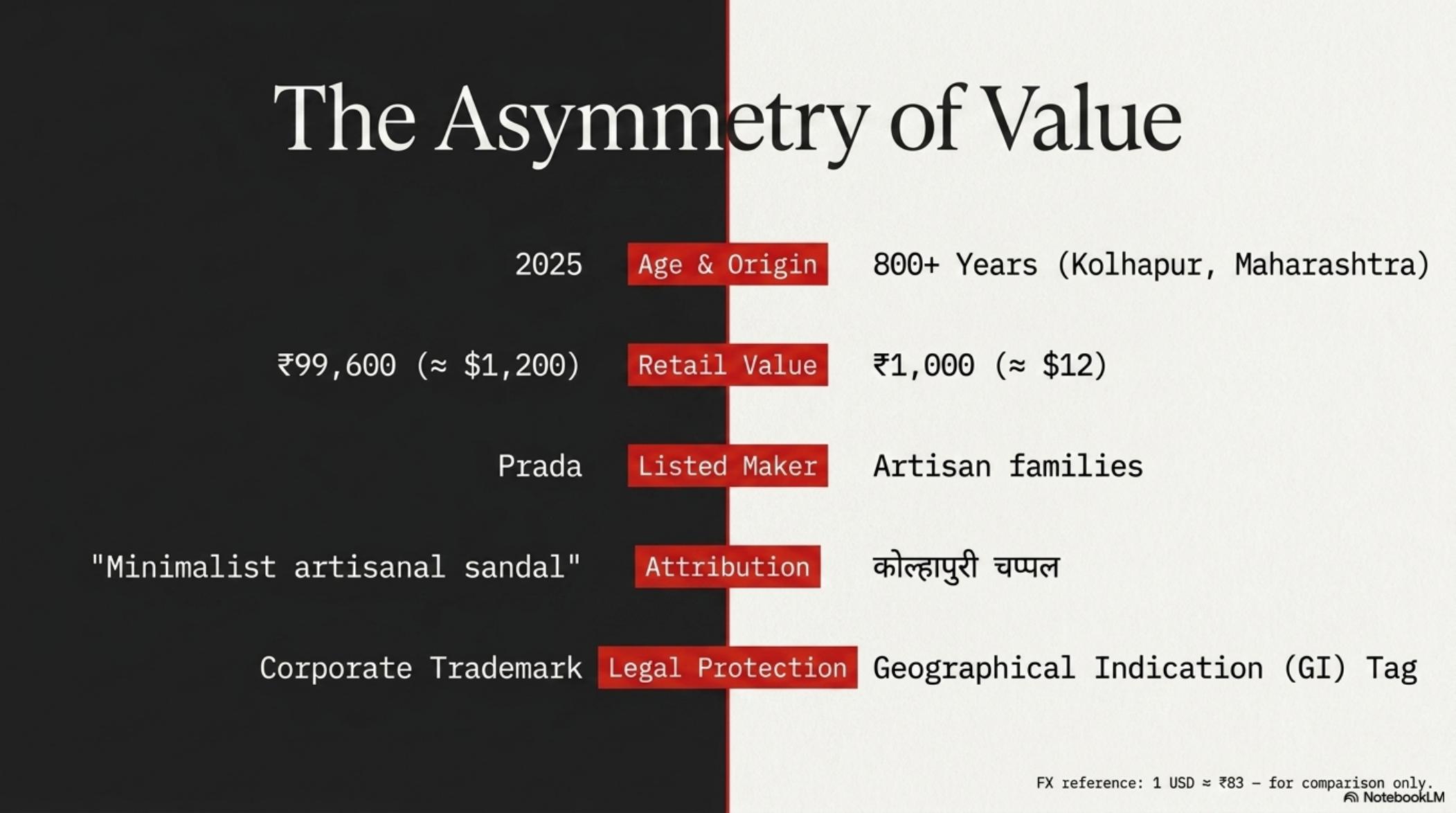
Prada
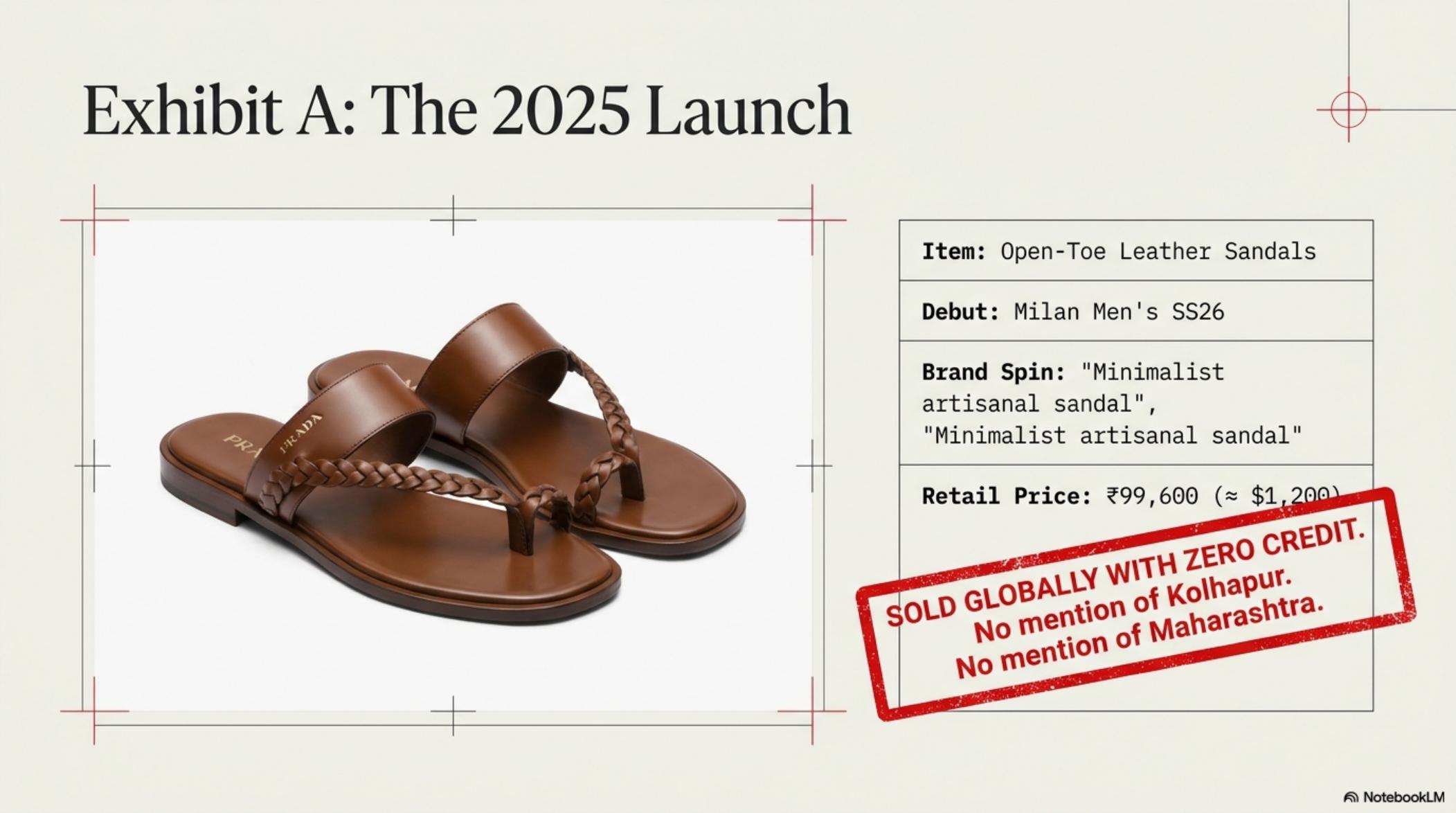
- Item
- Open-Toe Leather Sandals
- Year
- 2025
- Retail
- ₹99,600≈ $1,200
- Spin
- "Minimalist artisanal sandal"
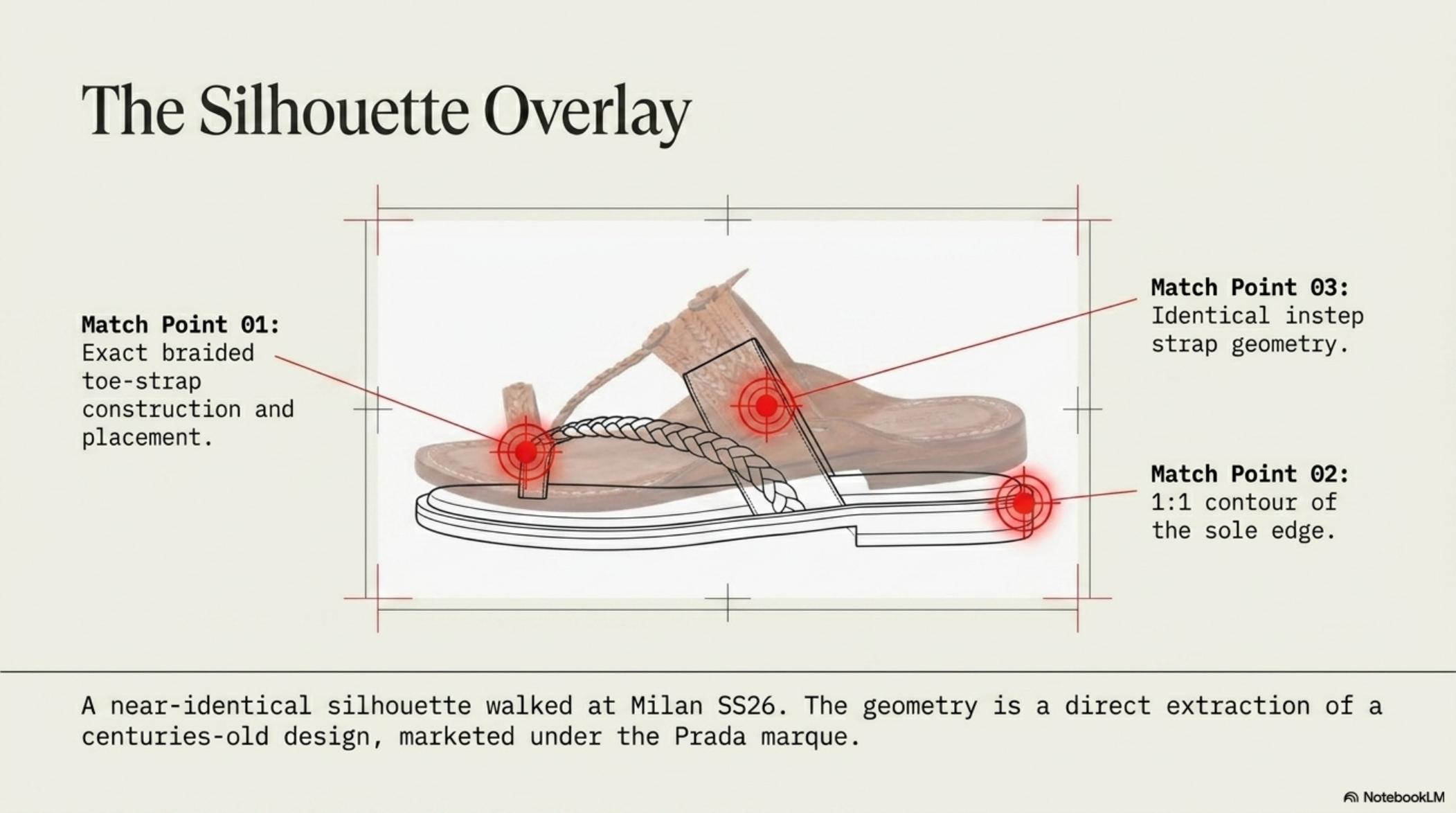
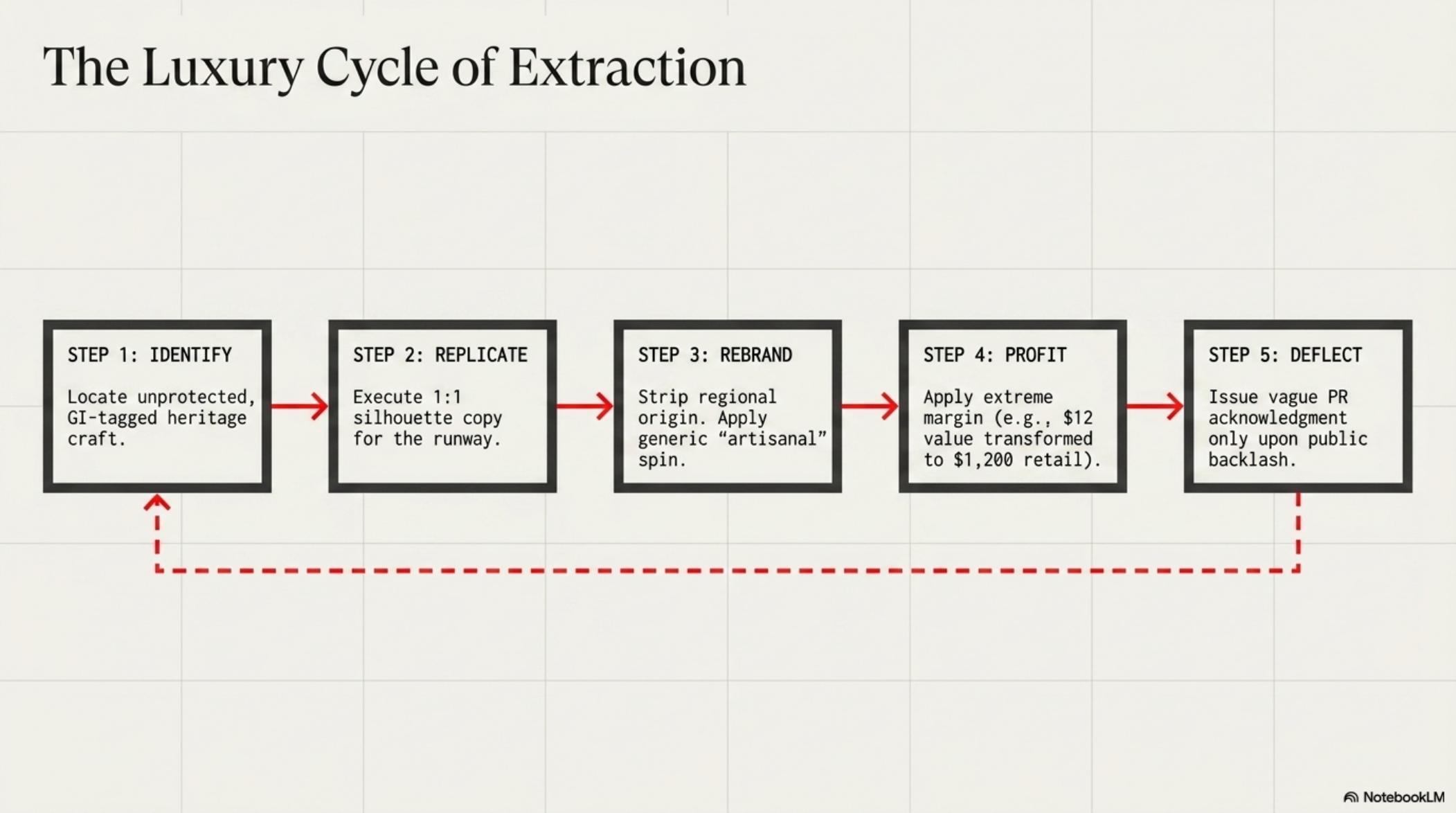
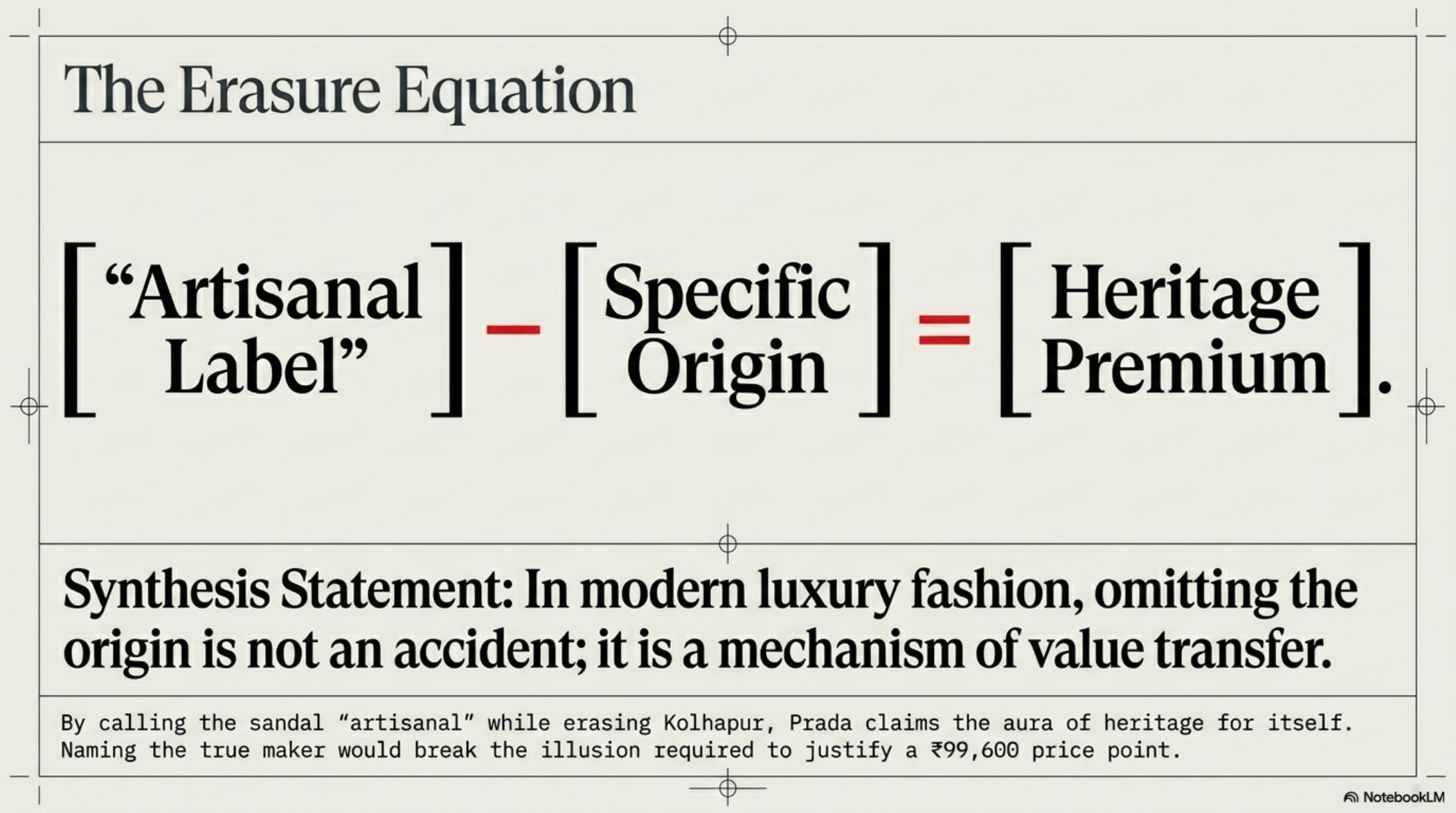
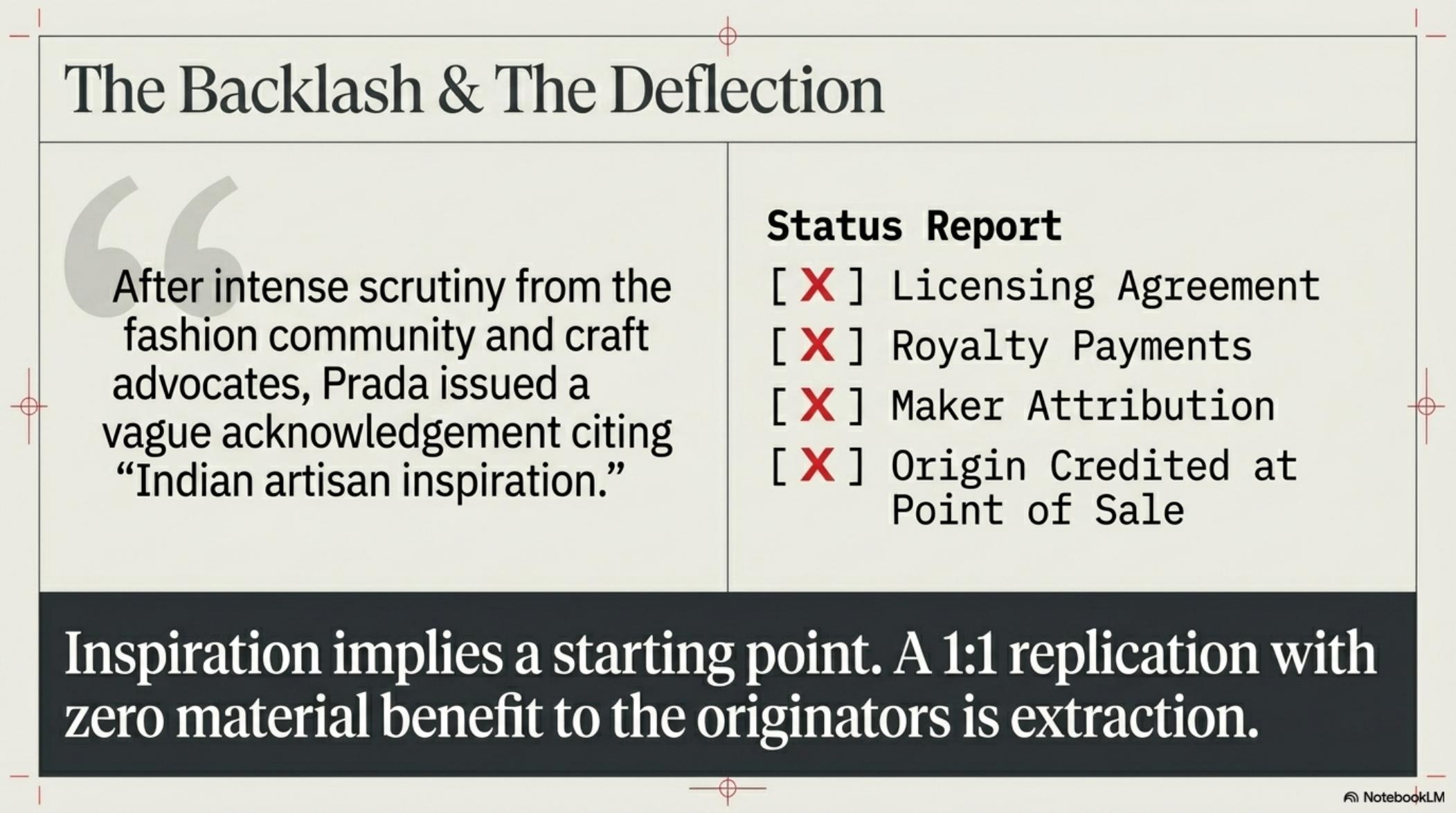
Nearly identical silhouette, toe-strap construction, and sole. Walked at Milan Men's SS26 and sold globally as a Prada-designed sandal with no mention of Kolhapur or Maharashtra. After public backlash, Prada issued a vague acknowledgement of 'Indian artisan inspiration' — no licensing, no royalty, no listed maker.
कोल्हापुरी चप्पल
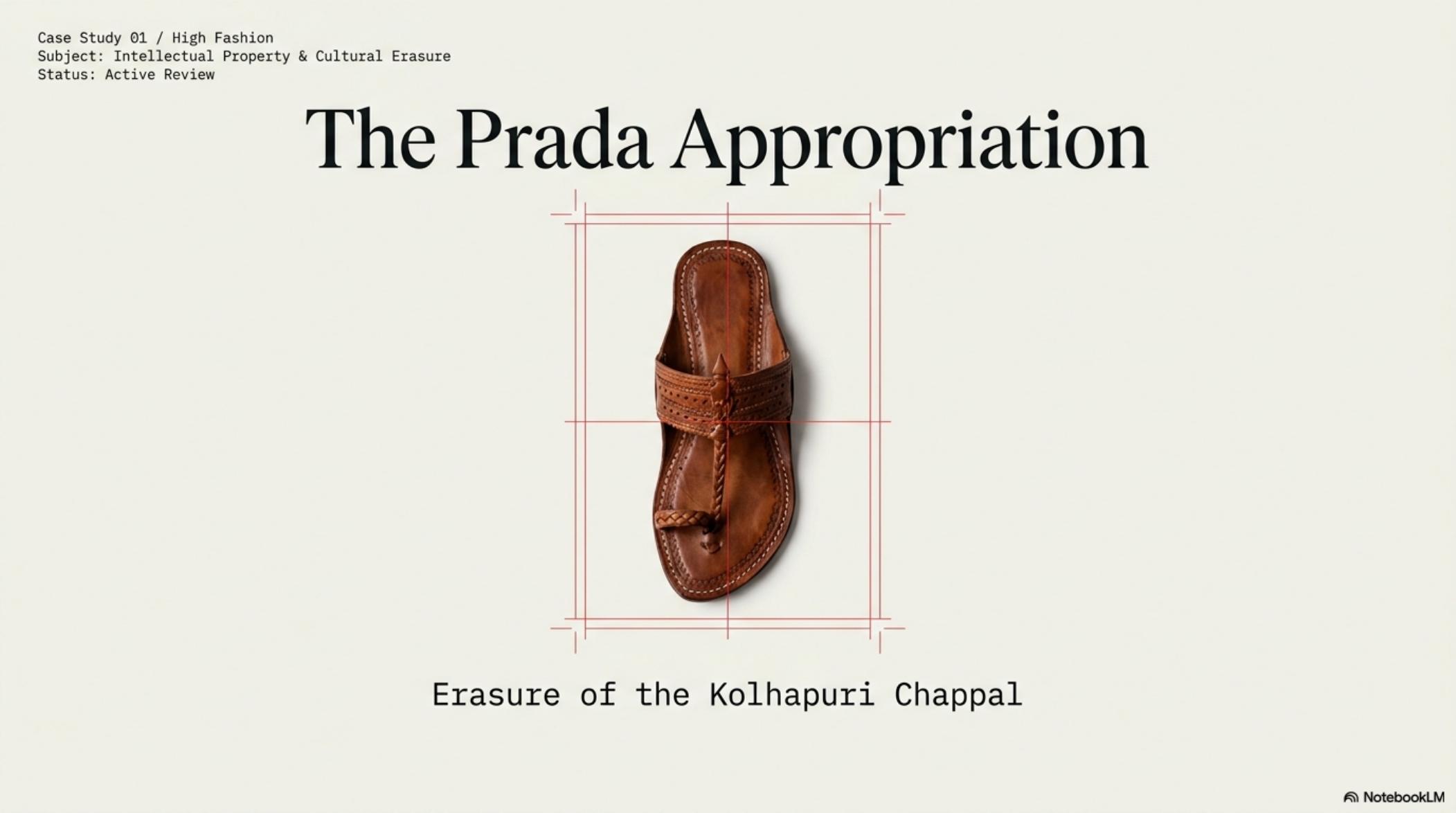
Kolhapuri Chappal
- Region
- Kolhapur, Maharashtra
- True Value
- ₹1,000≈ $12
- Category
- 01 · High Fashion
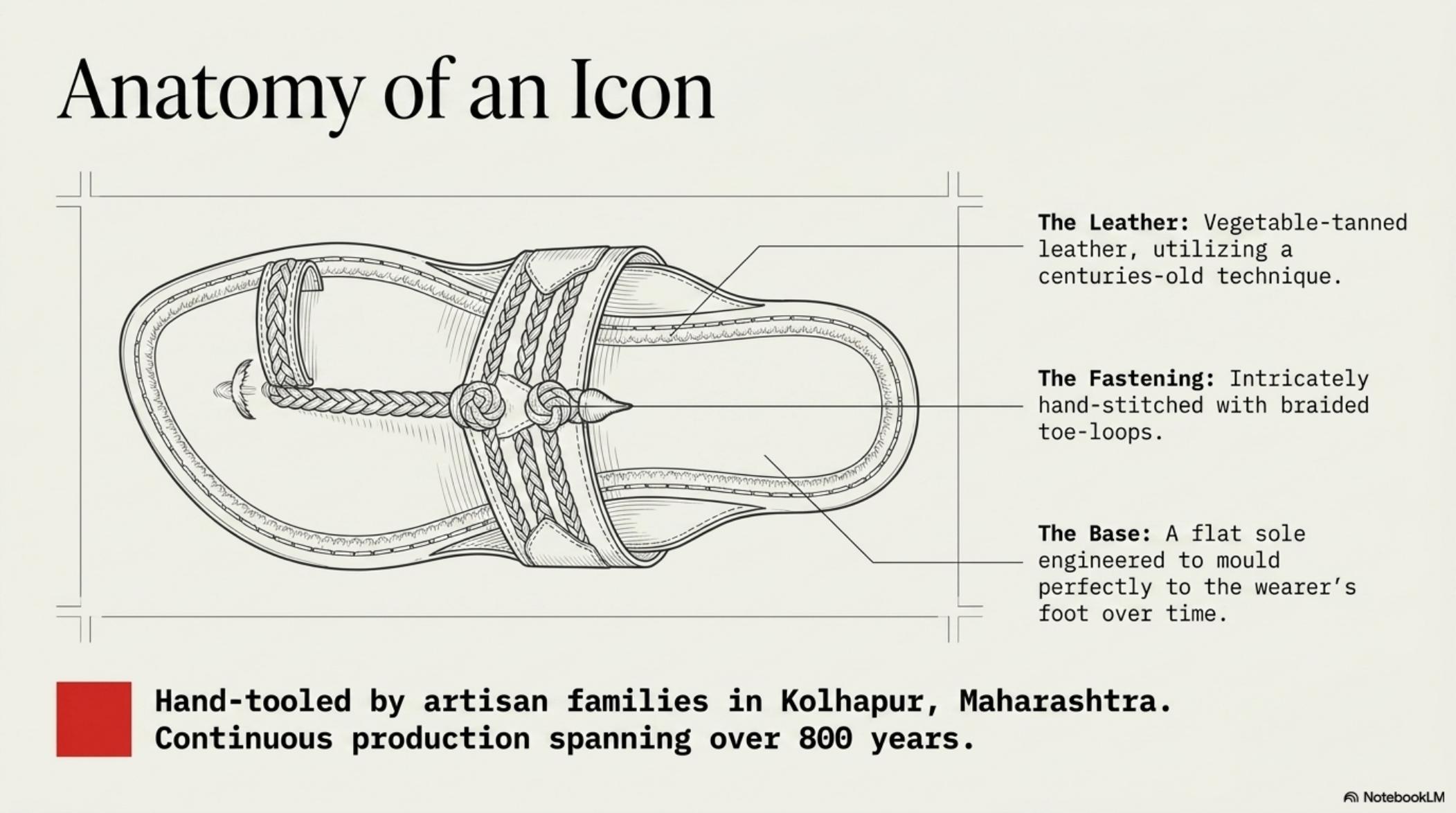
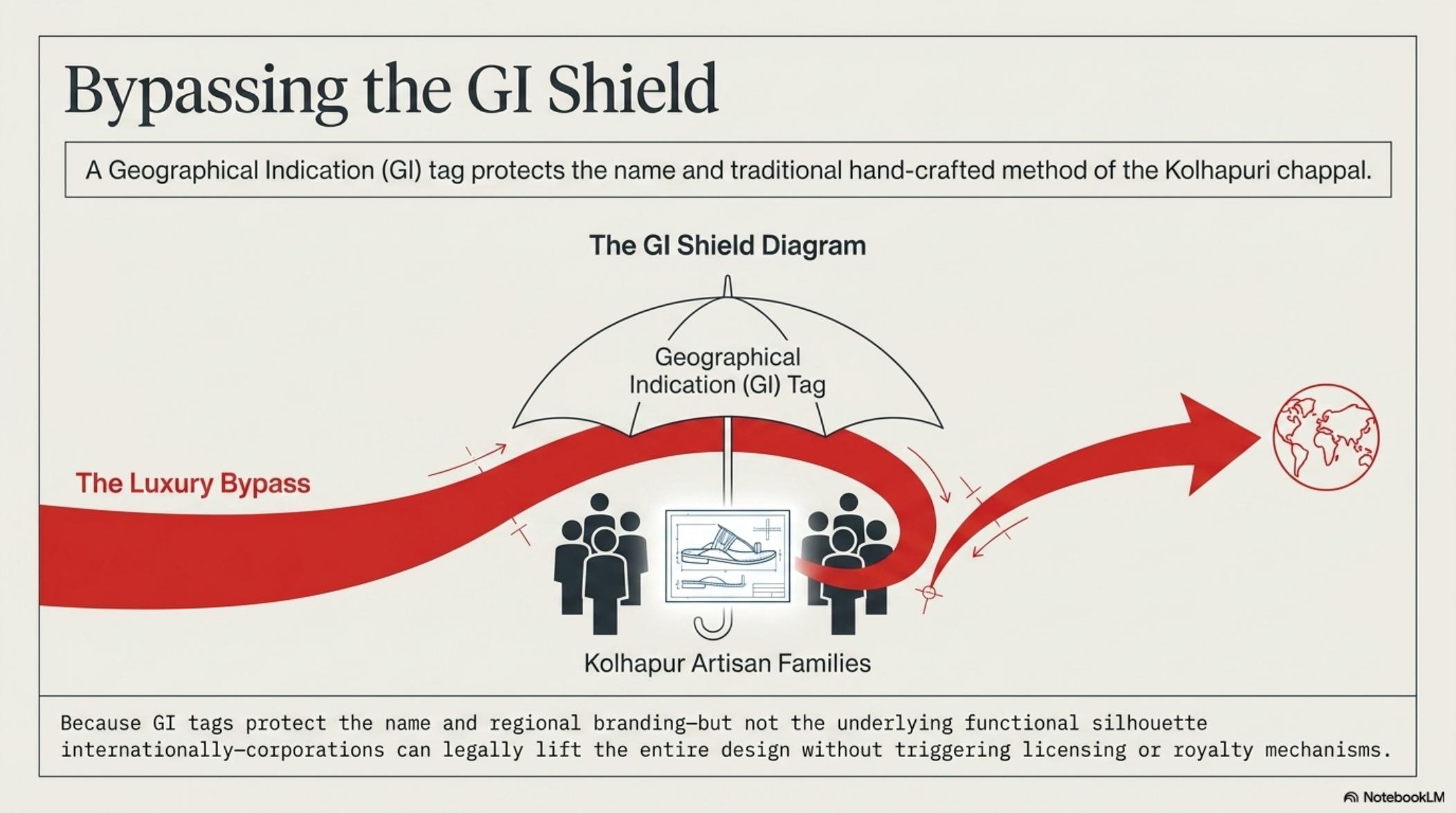
Hand-crafted leather sandal from Kolhapur, Maharashtra. Made by artisan families using a centuries-old technique of hand-stitching with vegetable-tanned leather, braided toe-loops, and a flat sole moulded to the wearer's foot over time. Holds a Geographical Indication tag protecting the name and the method.
FX reference: 1 USD ≈ ₹83 — for comparison only
The Story
In 2025, luxury fashion house Prada launched its new collection featuring "Open-Toe Leather Sandals" priced at ,200. Marketed as a "minimalist artisanal sandal," the product bore a striking resemblance to the traditional Indian Kolhapuri Chappal. The launch sparked immediate discussion among craft enthusiasts and cultural observers.
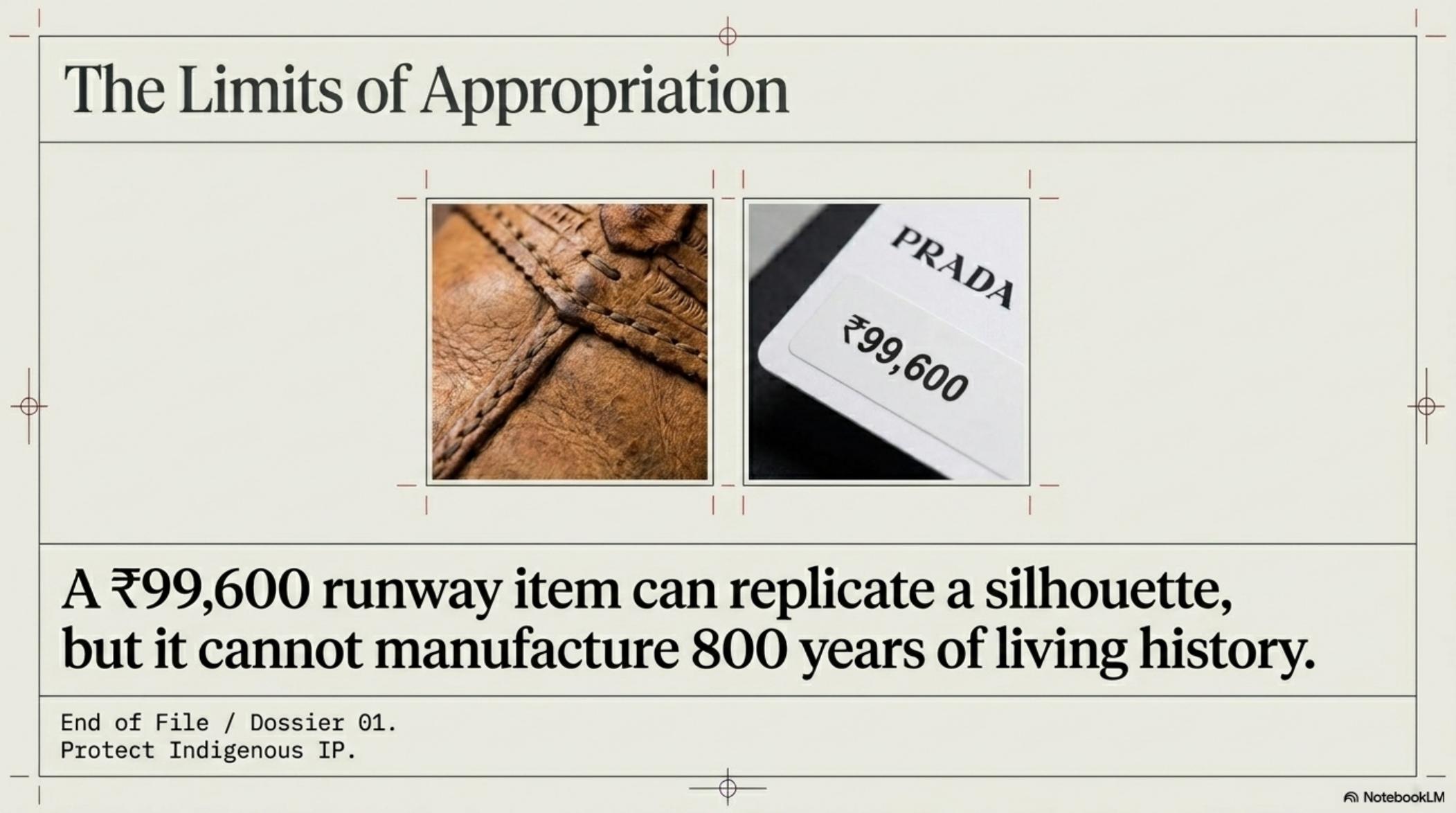
The Kolhapuri Chappal, or कोल्हापुरी चप्पल, is a hand-tooled leather sandal originating from Kolhapur, Maharashtra, India, with a history spanning over 800 years. These distinctive sandals are crafted by skilled artisans using vegetable-tanned leather, known for their durability and unique aesthetic. They hold significant cultural value, often passed down through generations, and are recognized with a Geographical Indication (GI) tag, signifying their specific regional origin and traditional craftsmanship.
The fashion community and craft advocates quickly called out Prada for its appropriation. Observers noted the near-identical silhouette to the GI-tagged Kolhapuri chappal, highlighting the absence of any credit or acknowledgment of its Indian origins. Critics pointed out the vast price disparity between the luxury item and the traditional sandal, which typically retails for around ₹1,000, and questioned the lack of royalty or benefit to the original craftspeople.
A near-identical silhouette to the GI-tagged Kolhapuri chappal, hand-tooled in Maharashtra for over 800 years. No mention. No royalty.
The Dossier
A visual breakdown of the appropriation — the luxury spin, the artisanal reality, and the full evidence deck.
- 'Do they have gold in them?': The Indian artisans up in arms over Prada's sandalsBBC ↗
- Did Prada 'steal' Indian sandal designs without giving credit?Al Jazeera ↗
- Why Prada – and other luxury brands – keep getting India wrongBBC ↗
- 'The Prada paradox': Maharashtra artisans meet CM Fadnavis, raise GI violation issueTimes of India ↗