Chanel
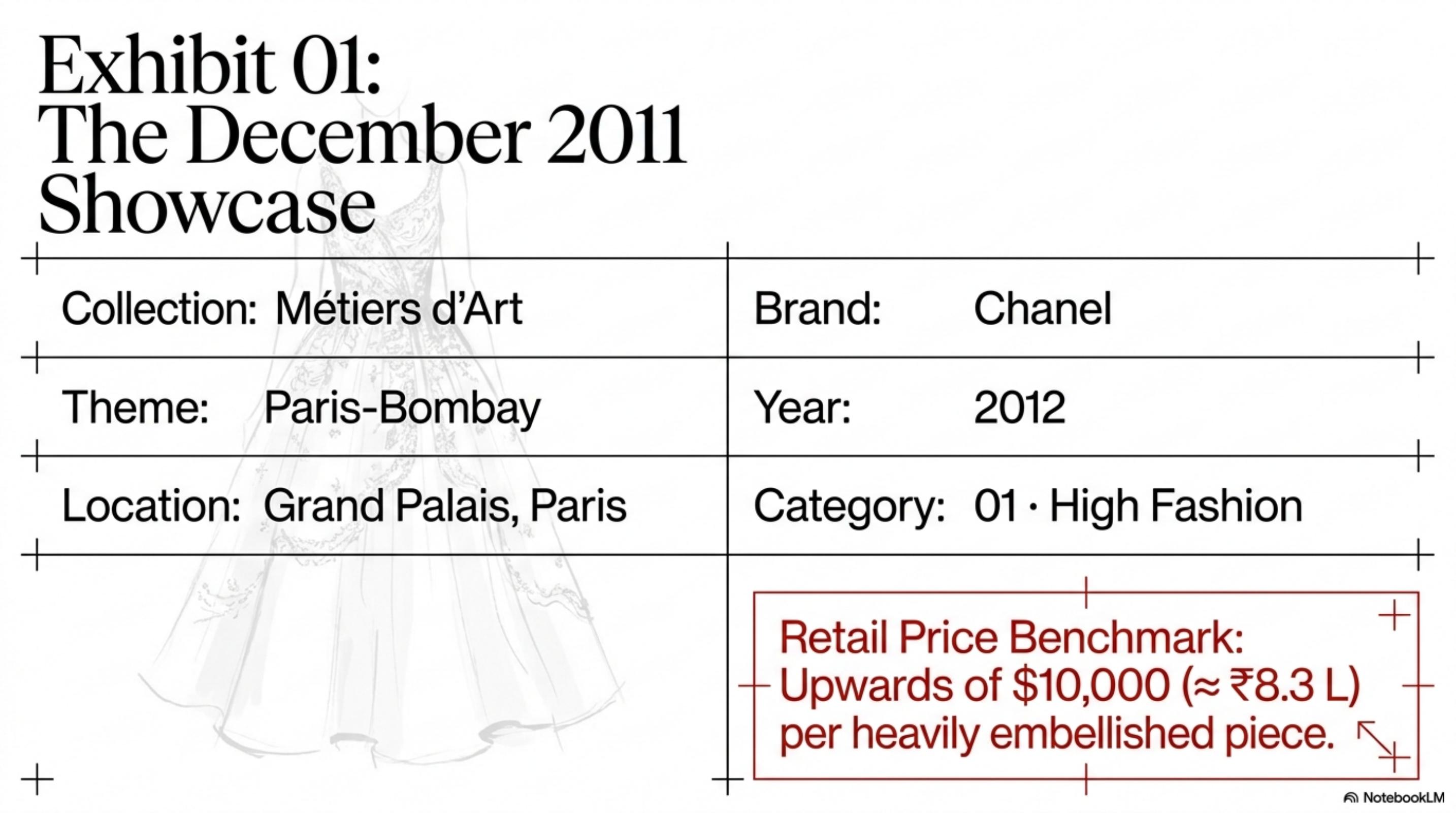
Paris-Bombay Métiers d'Art Collection · 2012
Chanel
- Item
- Paris-Bombay Métiers d'Art Collection
- Year
- 2012
- Retail
- ₹8.3 L≈ $10,000
- Spin
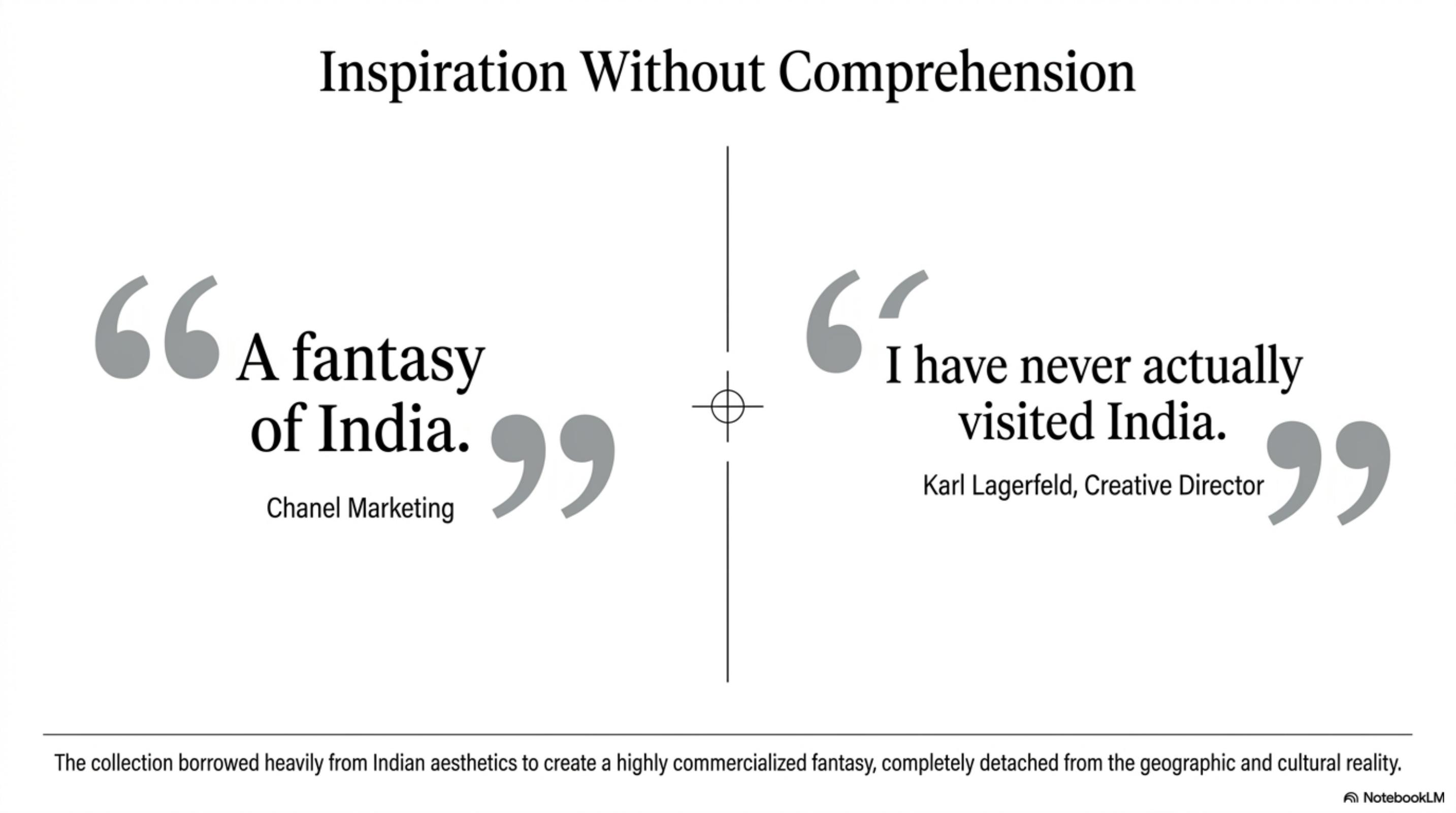
- "A fantasy of India"
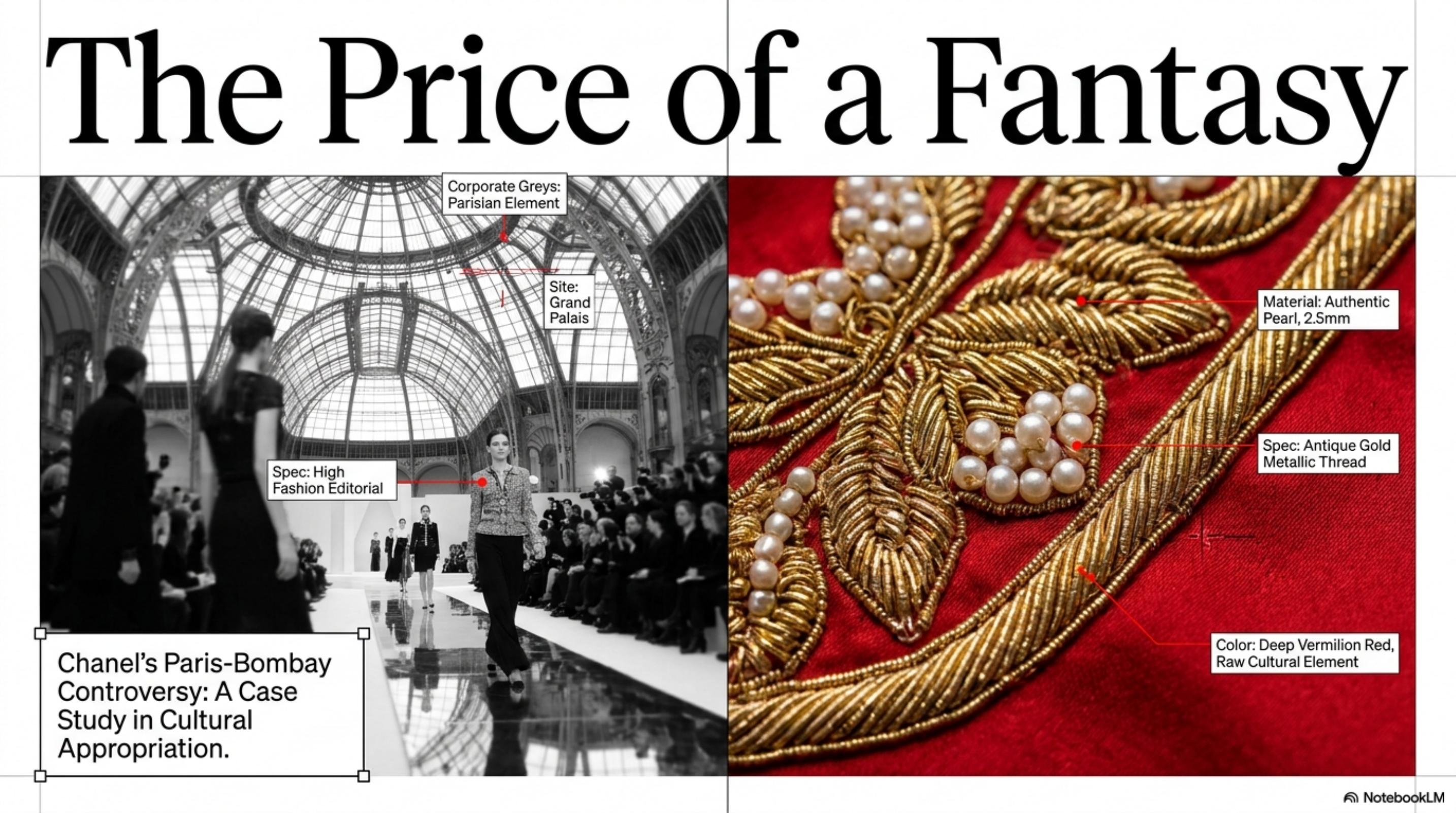
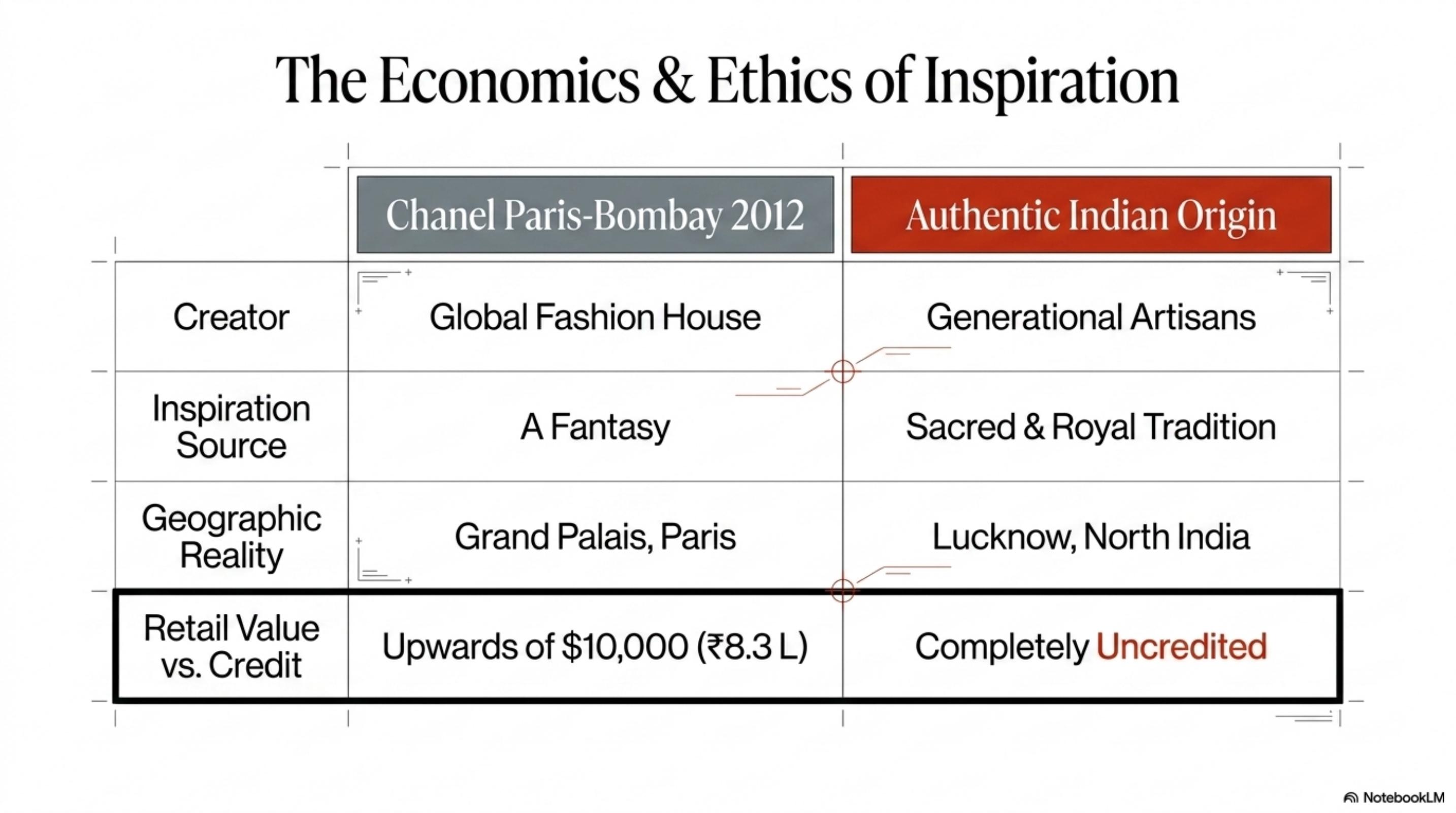
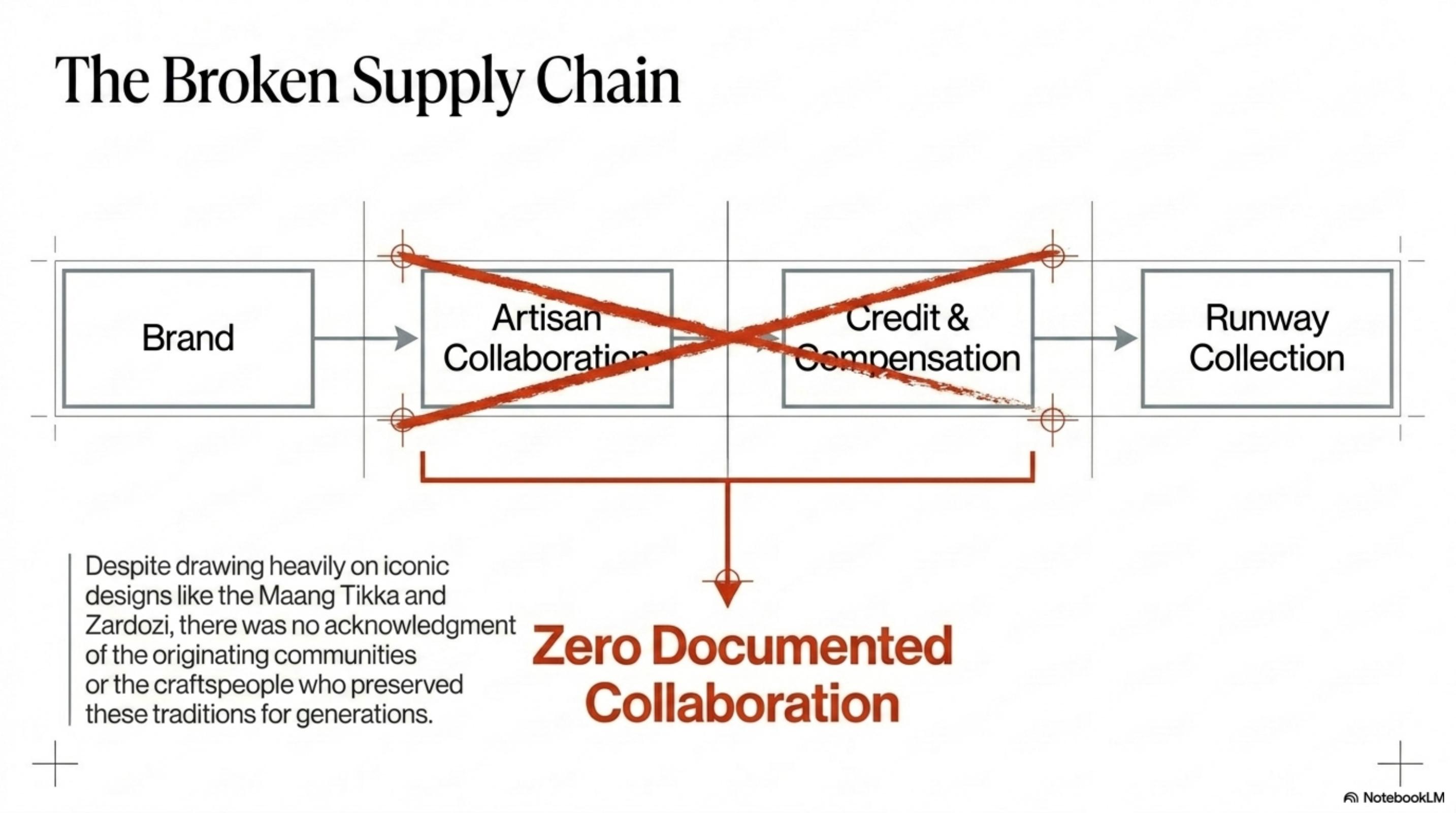
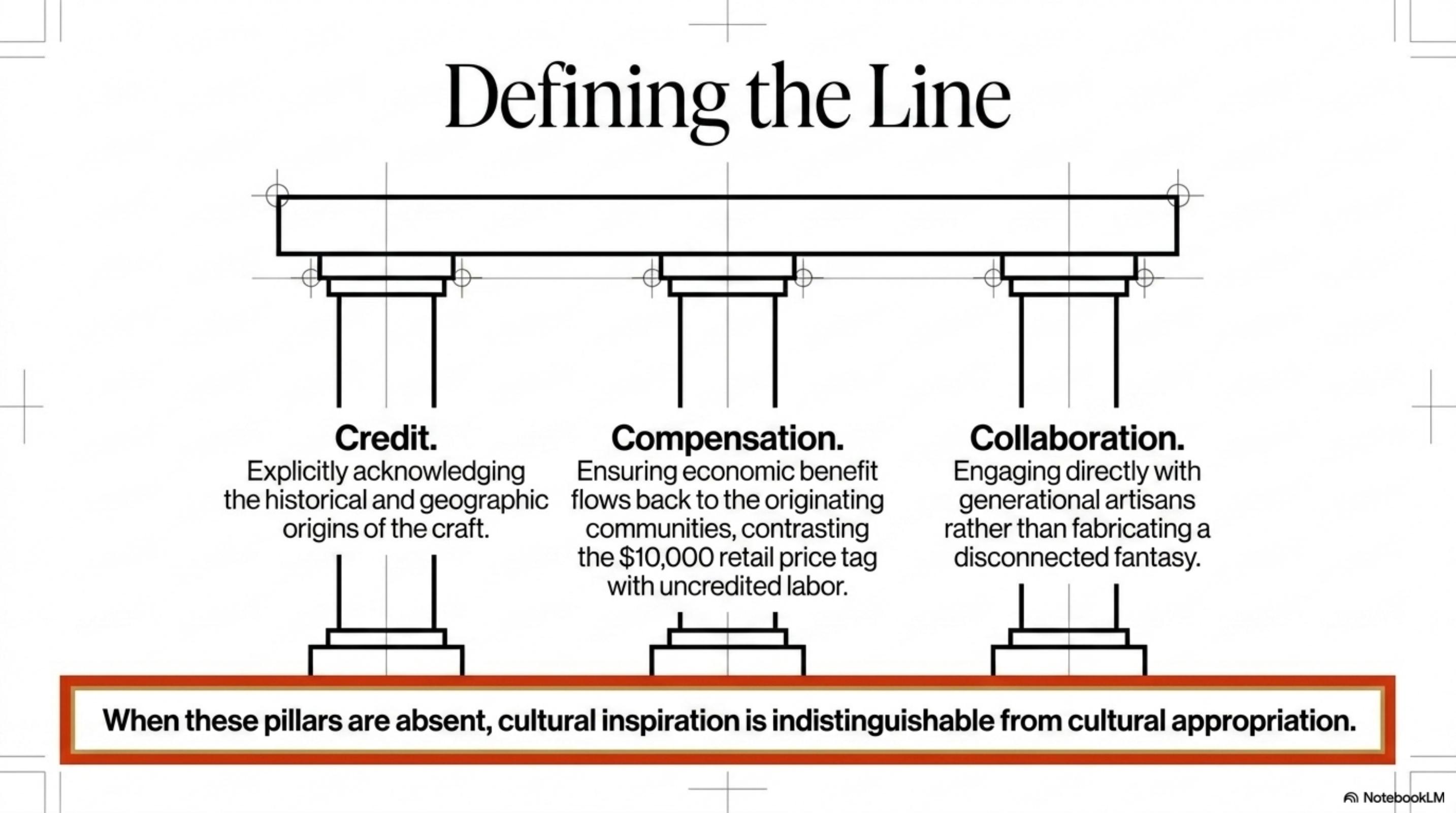
Chanel's 2012 'Paris-Bombay' Métiers d'Art collection presented a 'fantasy of India' drawing heavily on Indian aesthetics, including elements resembling the Maang Tikka and Zardozi embroidery. Despite the collection's Indian inspiration, the brand's creative director admitted to never having visited the country. The collection was sold globally at high price points, with no documented collaboration with Indian artisans or recognition of the original craftspeople and their traditions, raising concerns about cultural appropriation and lack of credit.
मांग टीका, ज़रदोज़ी
Maang Tikka & Zardosi
- Region
- Lucknow & North India
- True Value
- Uncredited
- Category
- 01 · High Fashion
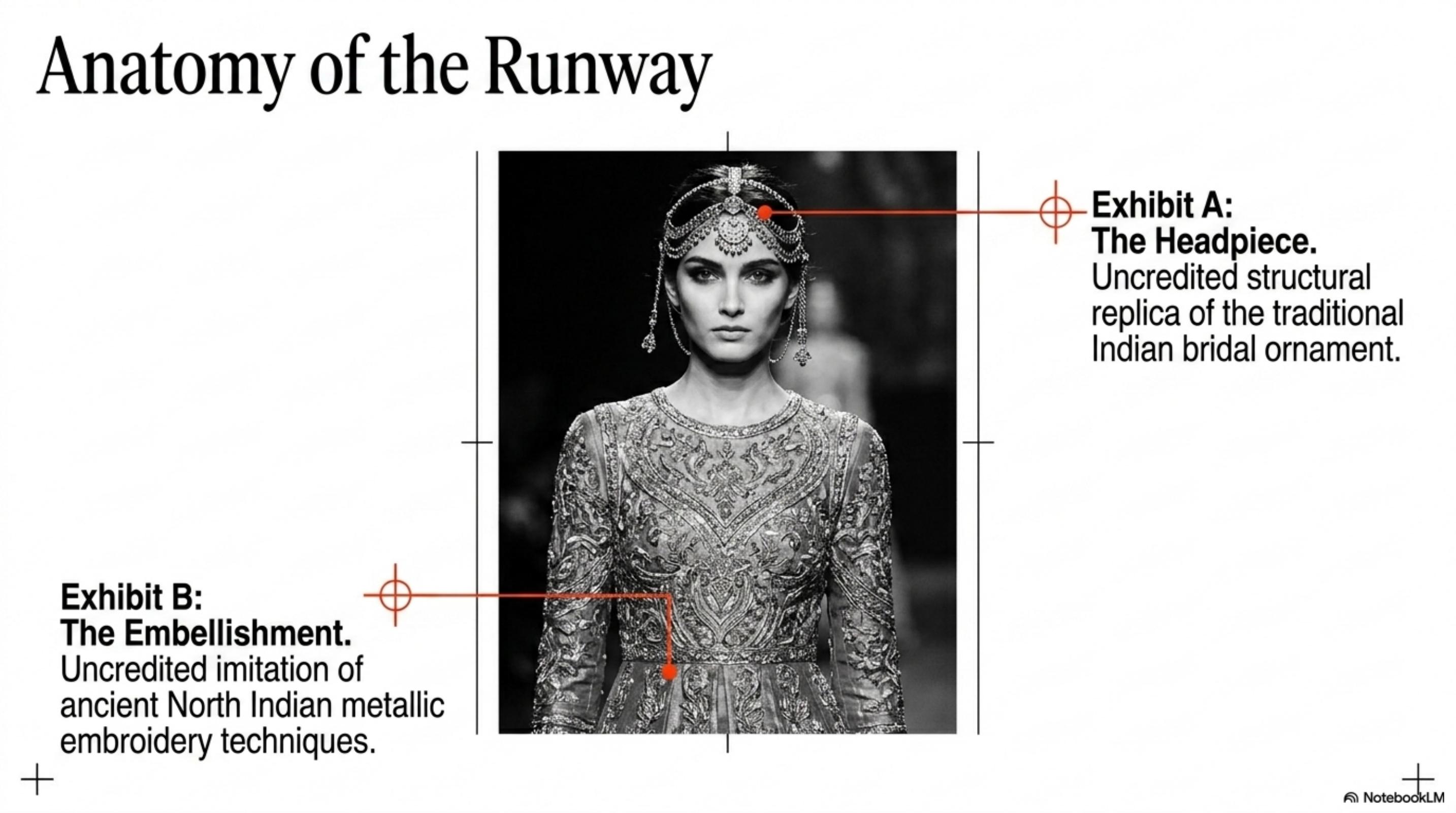
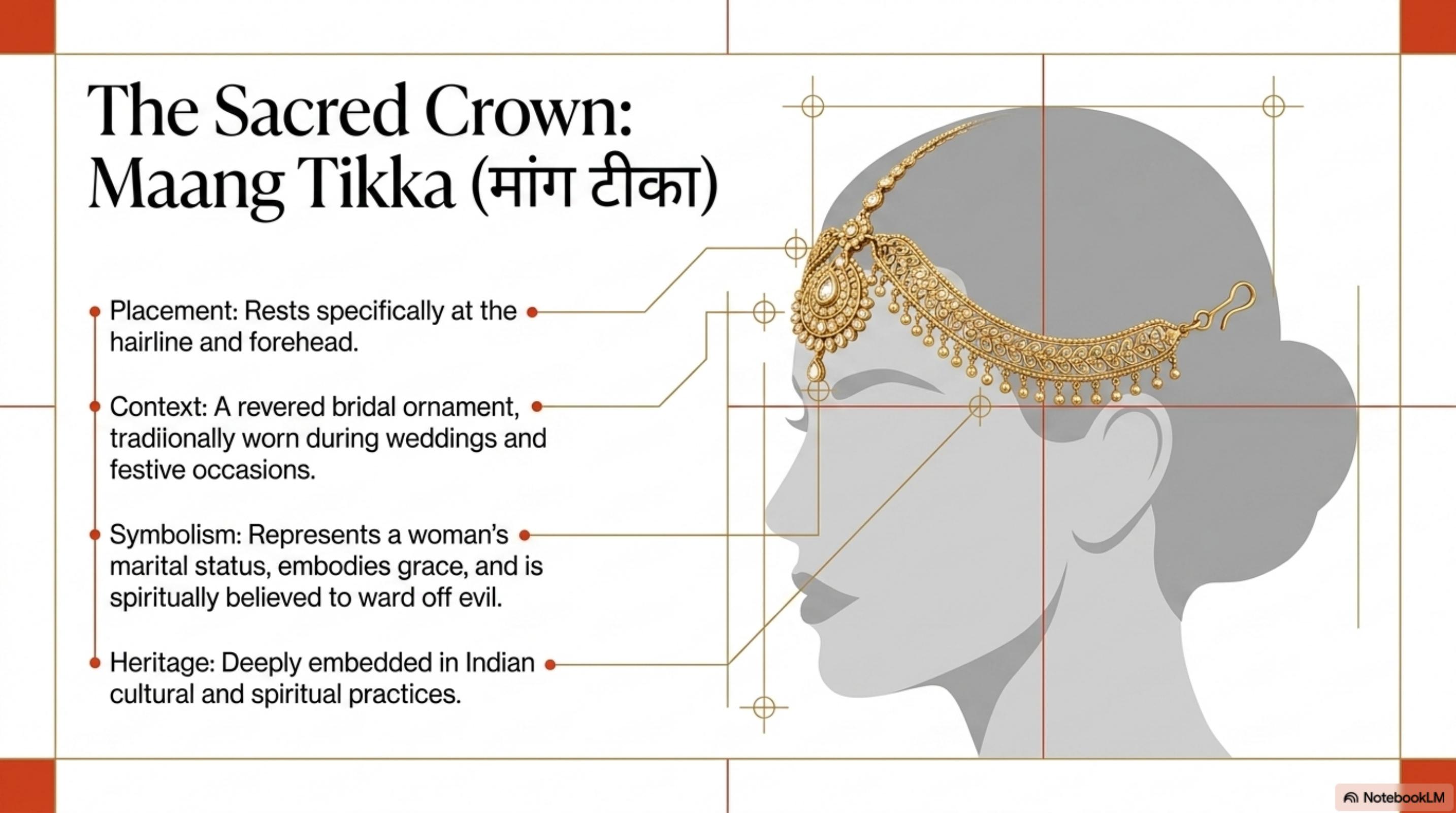
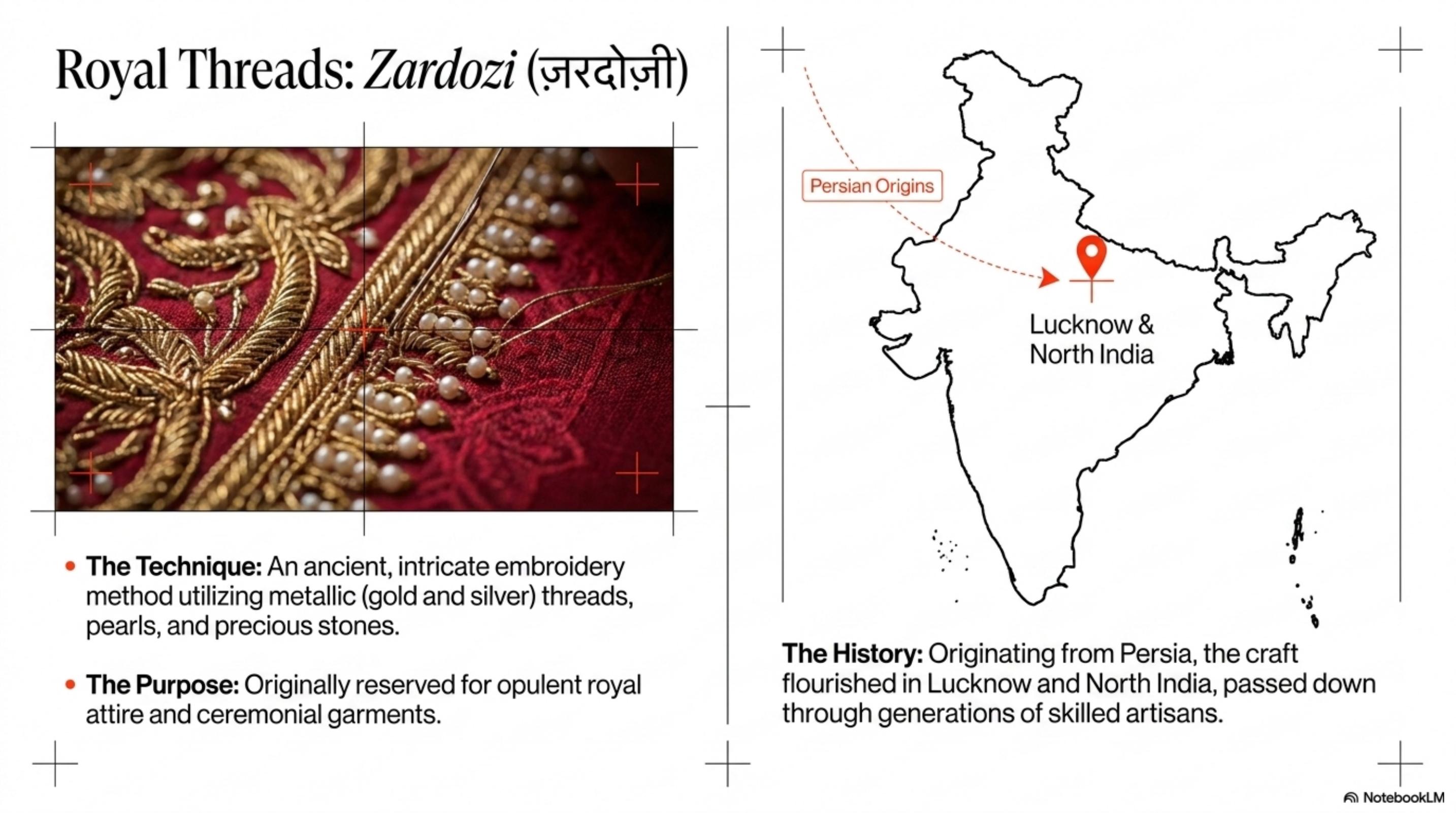
The Maang Tikka (मांग टीका) is a revered headpiece, traditionally worn by Indian brides, adorning the forehead at the hairline. It symbolizes a woman's marital status and is believed to enhance beauty and ward off evil. Zardozi (ज़रदोज़ी) is an ancient, intricate embroidery technique from North India, particularly Lucknow, using metallic threads, pearls, and precious stones to create opulent patterns on fabric for royal attire and ceremonial garments. Both are deeply embedded in Indian cultural and spiritual practices.
FX reference: 1 USD ≈ ₹83 — for comparison only
The Story
In December 2011, Chanel launched its 'Paris-Bombay Métiers d'Art' collection at the Grand Palais in Paris, showcasing an opulent range of garments and accessories. The collection, featuring elaborate embroidery and headpieces, was marketed as a 'fantasy of India' by the fashion house. Individual pieces, including heavily embellished dresses and jewelry, retailed for upwards of 0,000.
The collection prominently featured elements inspired by the Maang Tikka (मांग टीका) and Zardosi (ज़रदोज़ी). The Maang Tikka is a traditional headpiece worn by Indian women, typically at weddings and festive occasions, where it rests on the forehead, symbolizing grace and cultural heritage. Zardosi is an ancient form of intricate metal embroidery, originating from Persia and flourishing in places like Lucknow, North India. It involves stitching gold or silver threads onto fabric, often adorned with pearls and precious stones, a craft passed down through generations of skilled artisans.
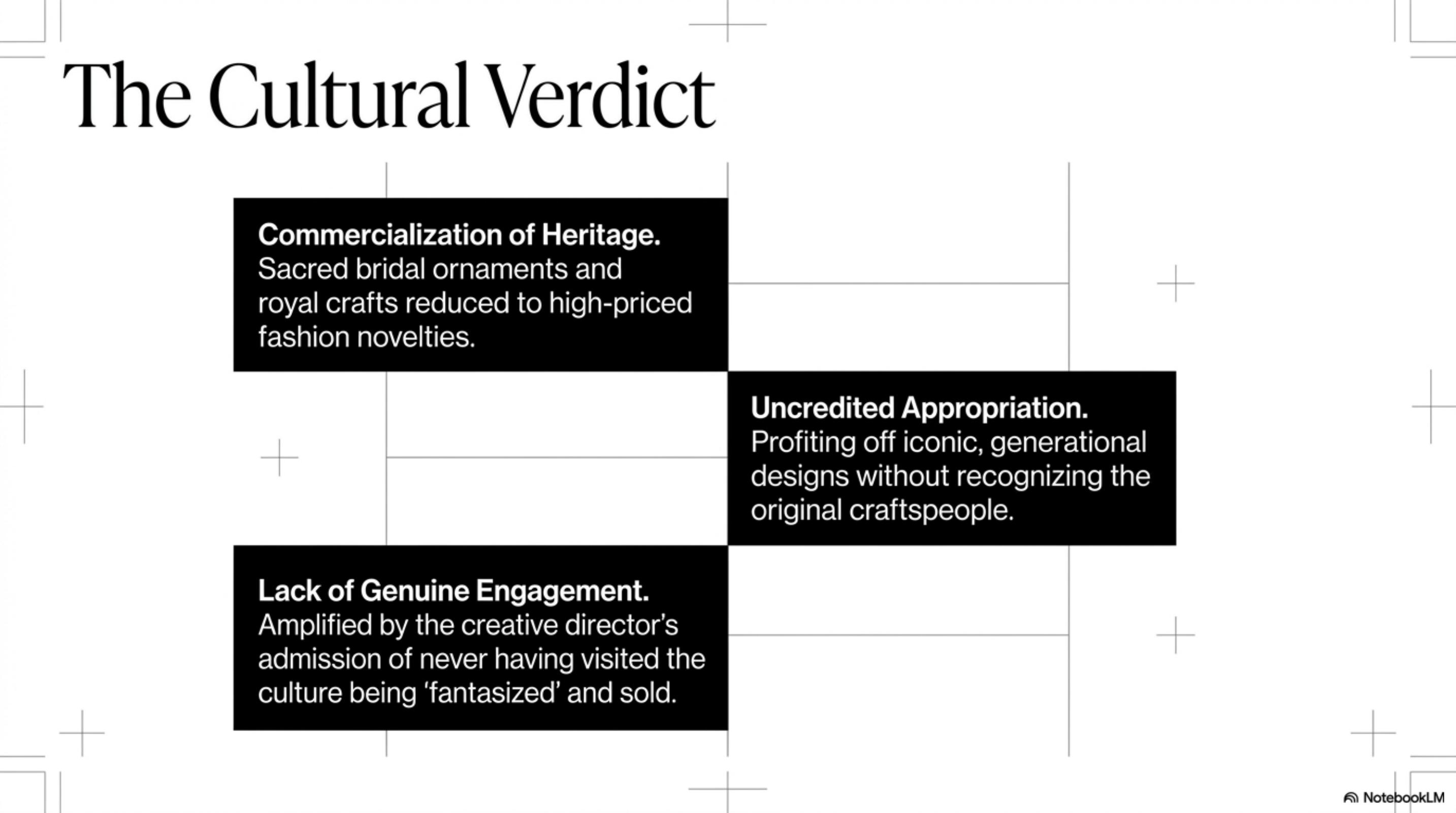
The collection quickly drew criticism from various observers, including cultural commentators and journalists, for its uncredited appropriation of Indian traditional crafts. Objections centered on the brand's use of iconic designs like the Maang Tikka and the Zardosi embroidery without any documented collaboration with or acknowledgment of the originating artisans or communities. The controversy was amplified by then-creative director Karl Lagerfeld's admission that he had never actually visited India, highlighting a perceived lack of genuine engagement with the culture being 'fantasized' and commercialized.
Karl Lagerfeld admitted he had never visited India. The collection borrowed liberally without any documented artisan collaboration.
The Dossier
A visual breakdown of the appropriation — the luxury spin, the artisanal reality, and the full evidence deck.
Reporting forthcoming