Ralph Lauren
Printed Cotton Wrap Skirt · 2026
Ralph Lauren
- Item
- Printed Cotton Wrap Skirt
- Year
- 2026
- Retail
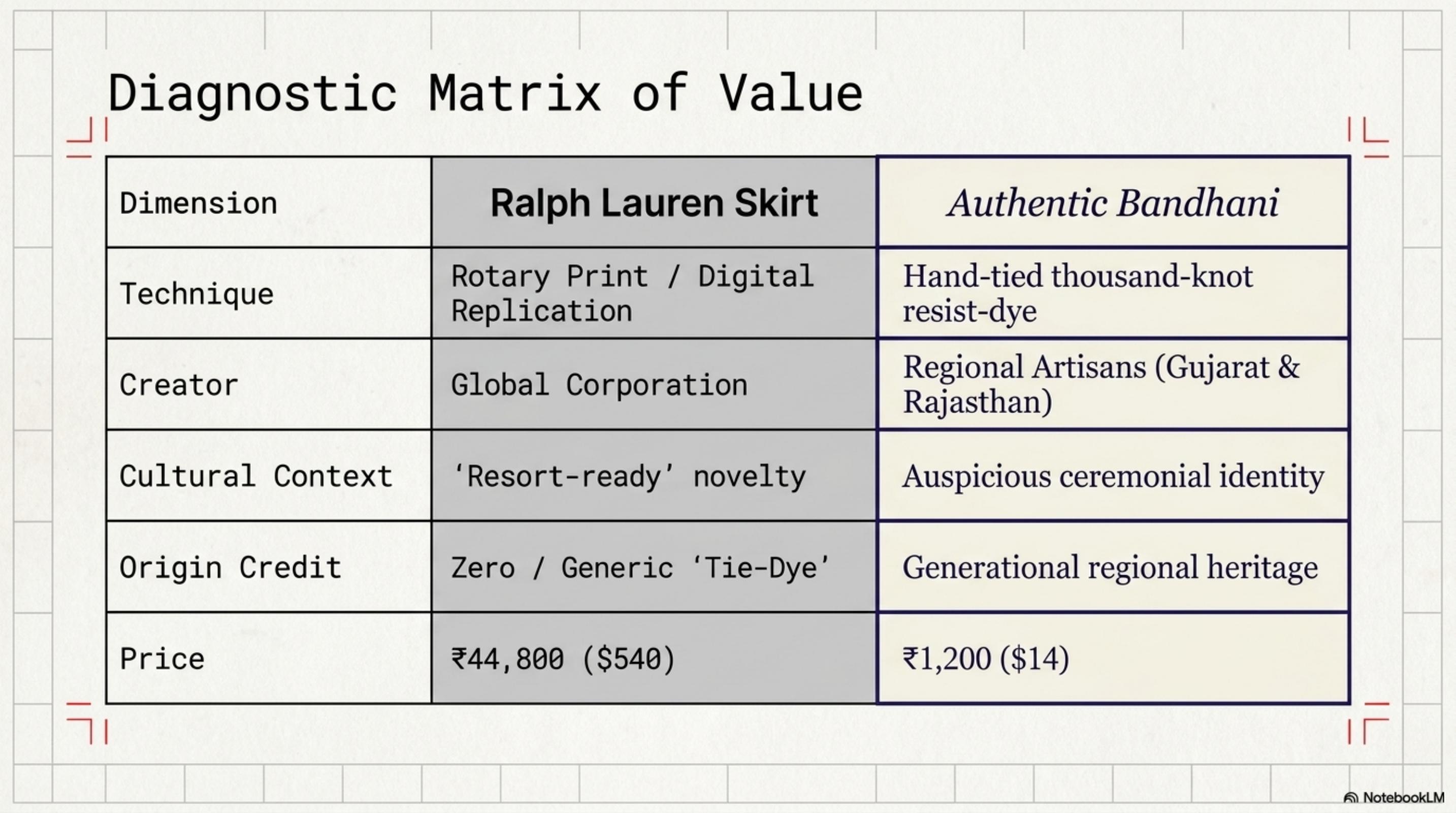
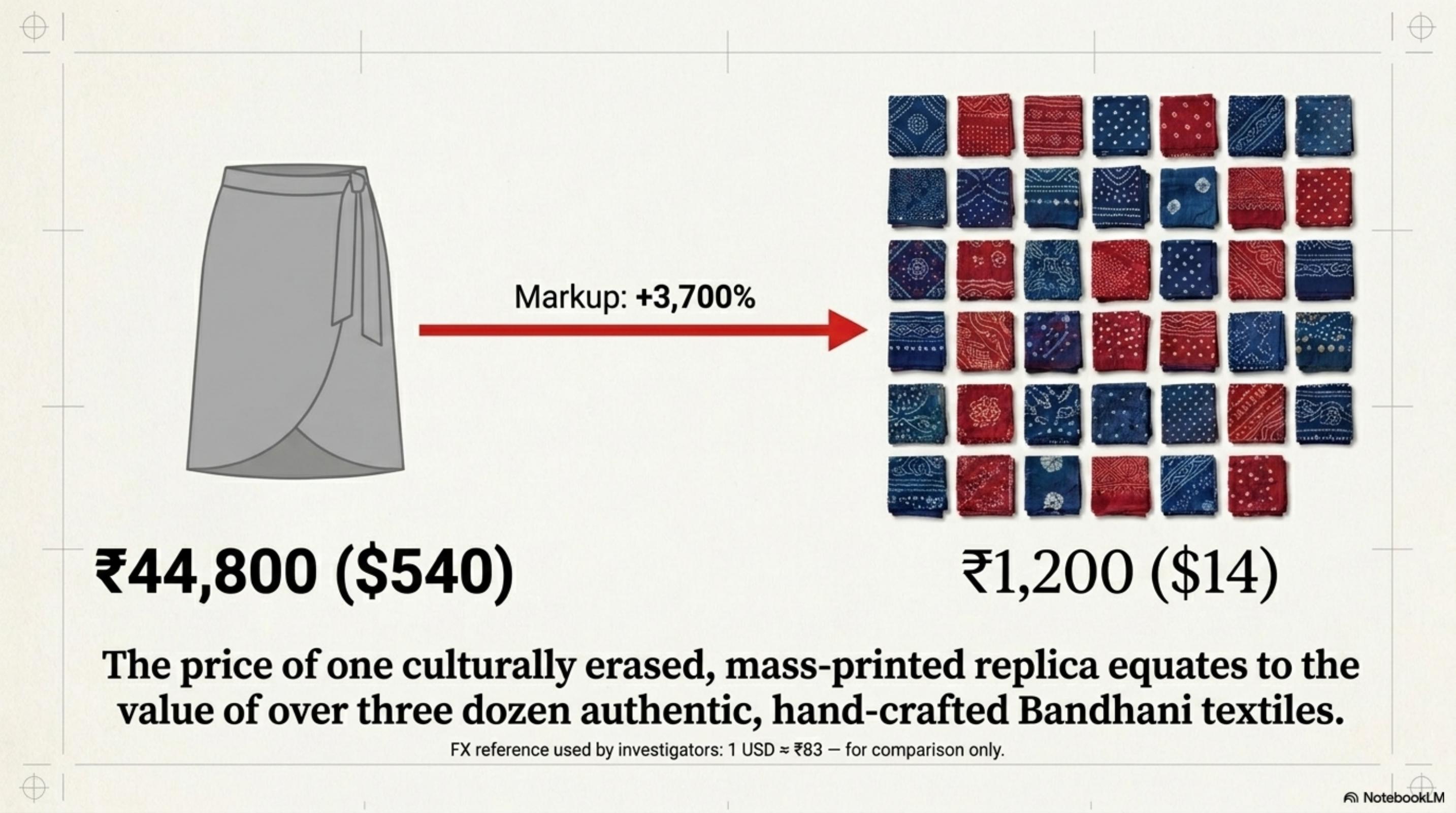
- ₹44,800≈ $540
- Spin
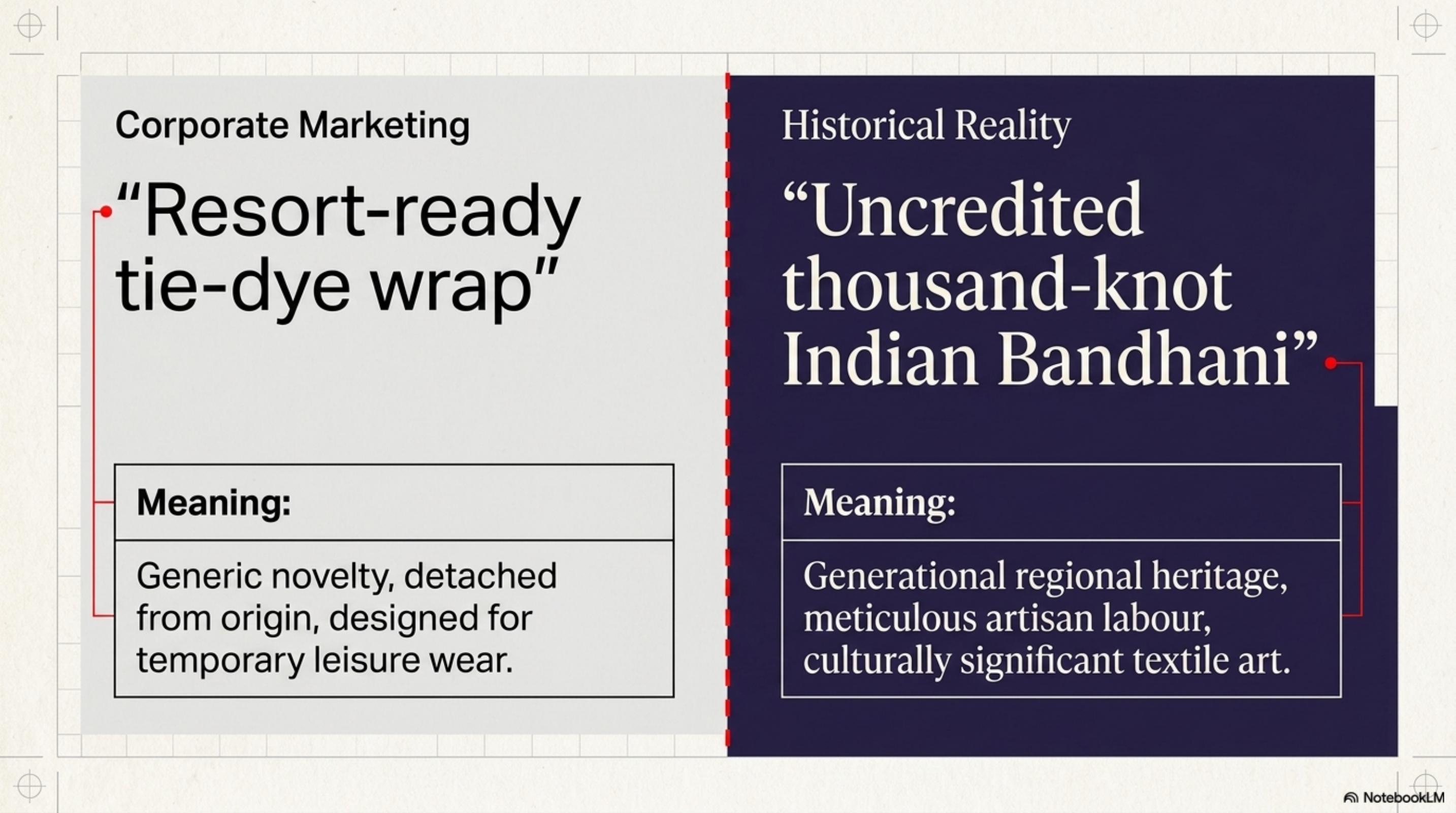
- "Resort-ready tie-dye wrap"
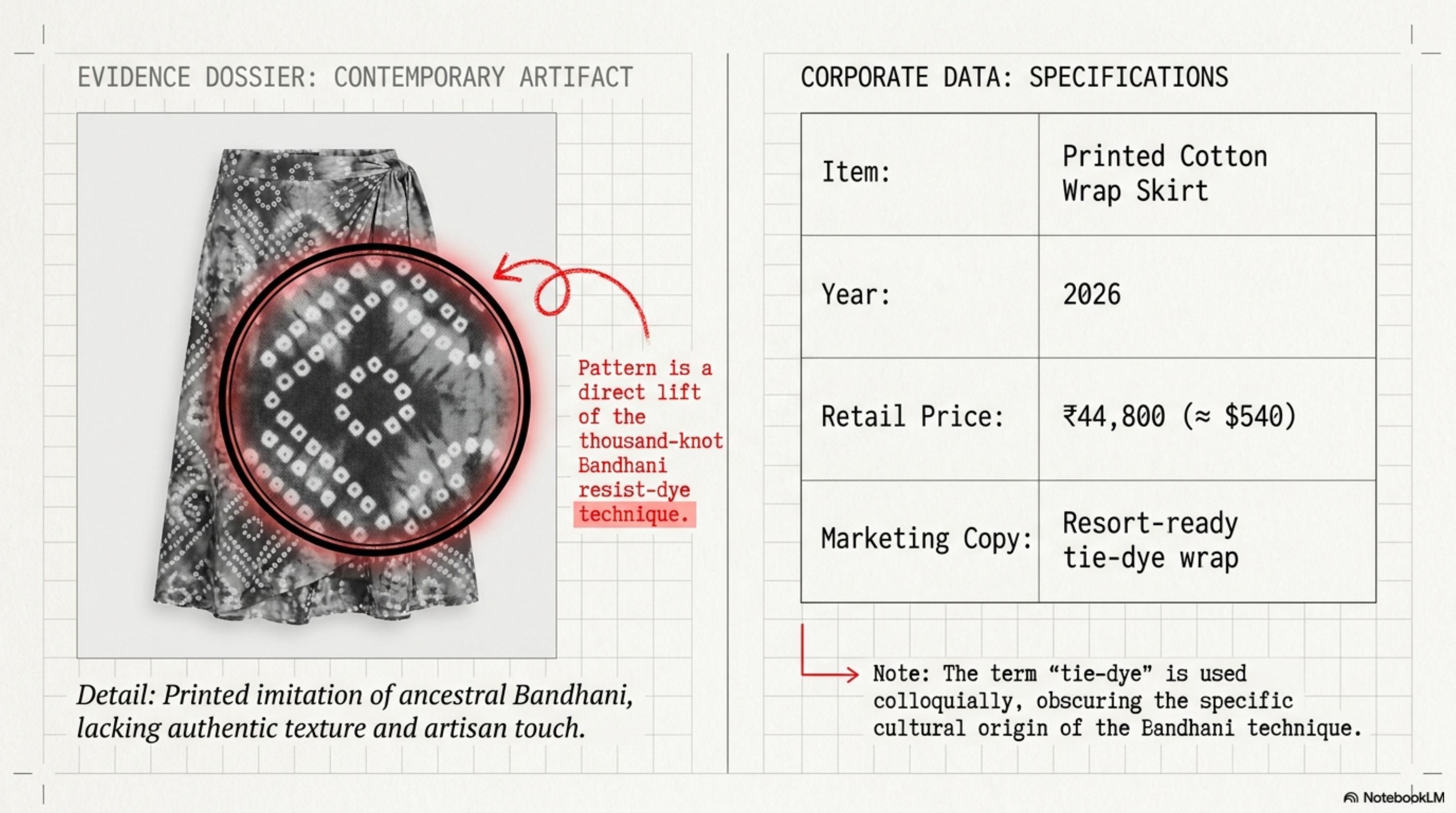
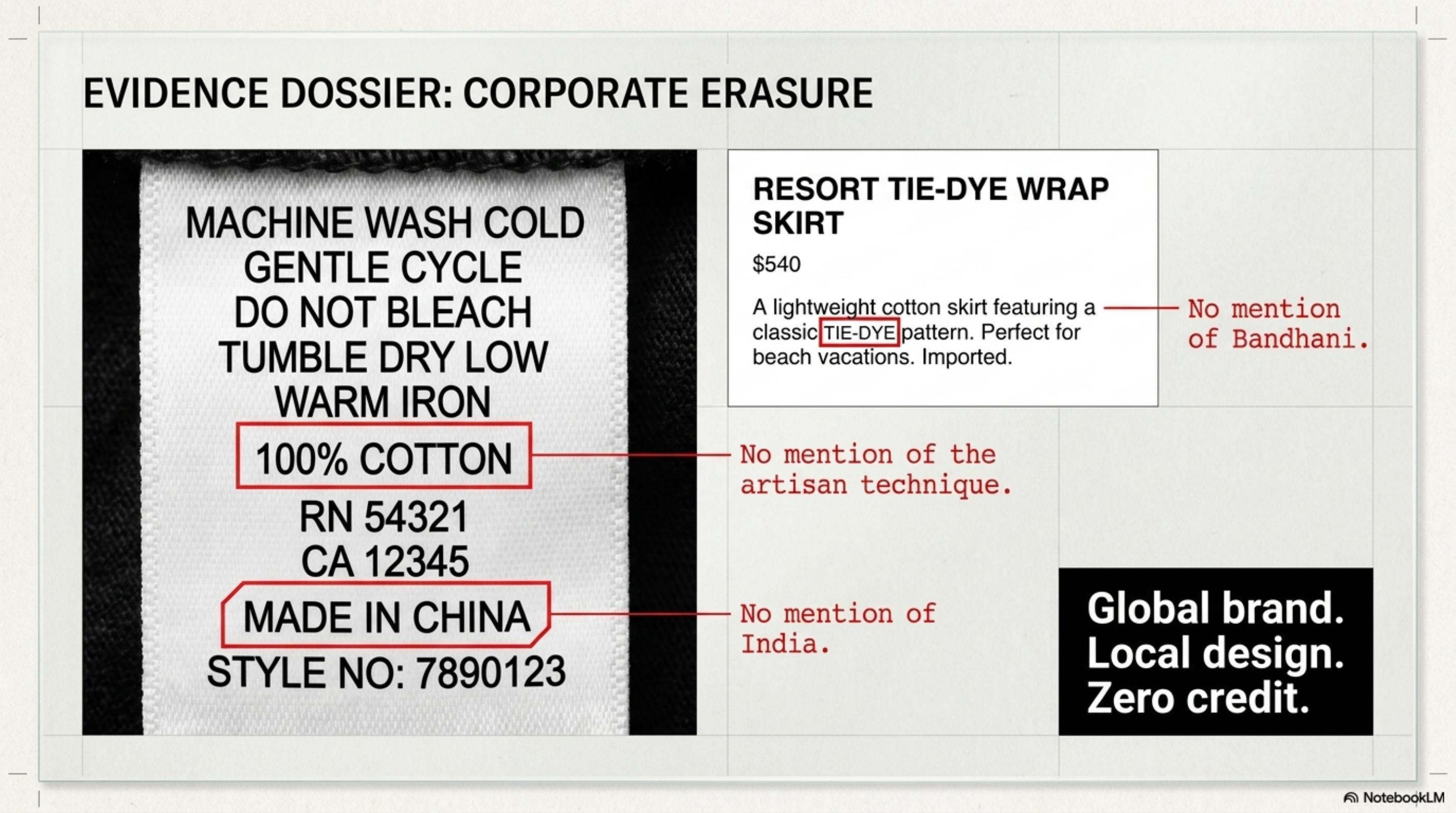
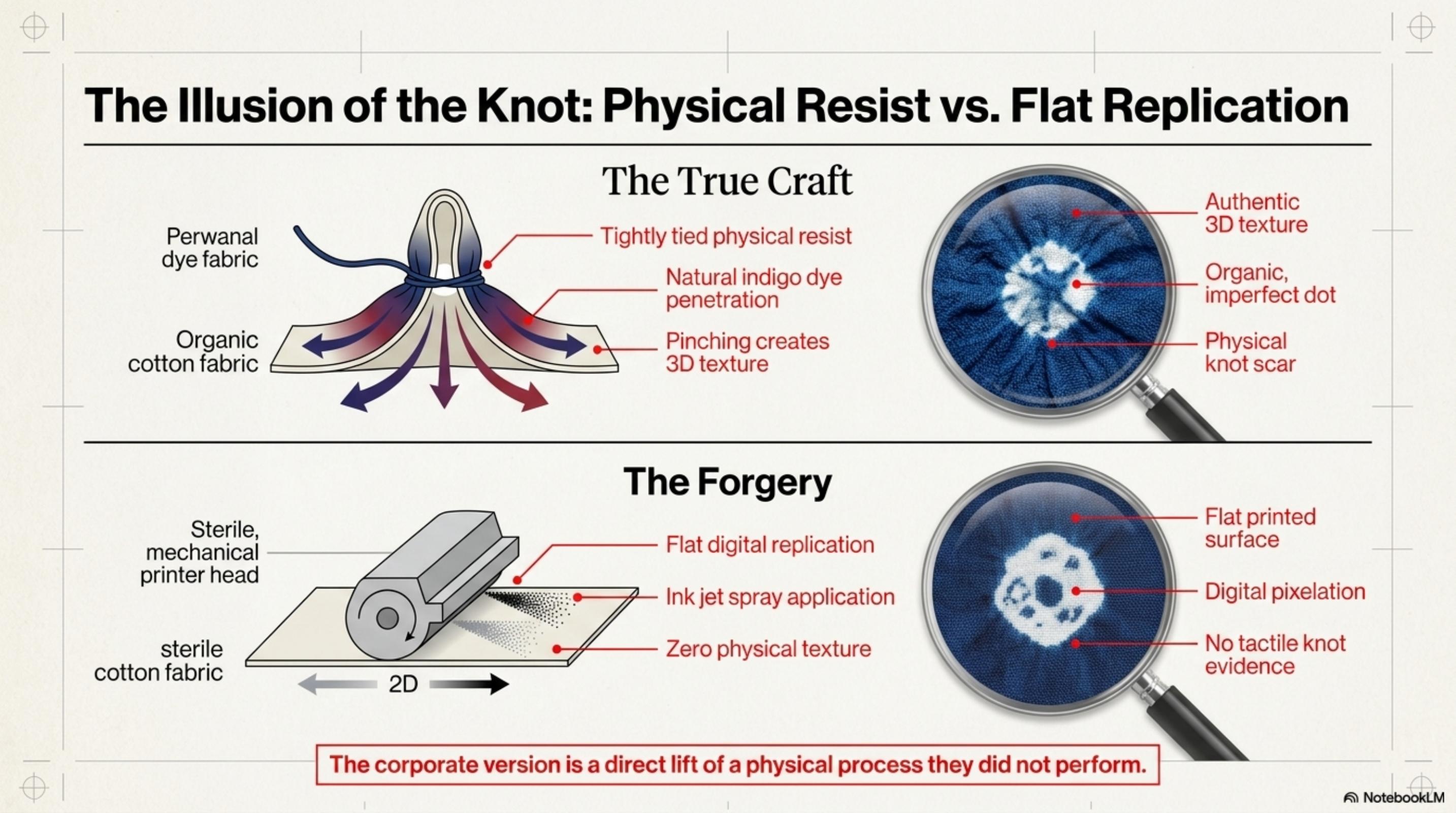
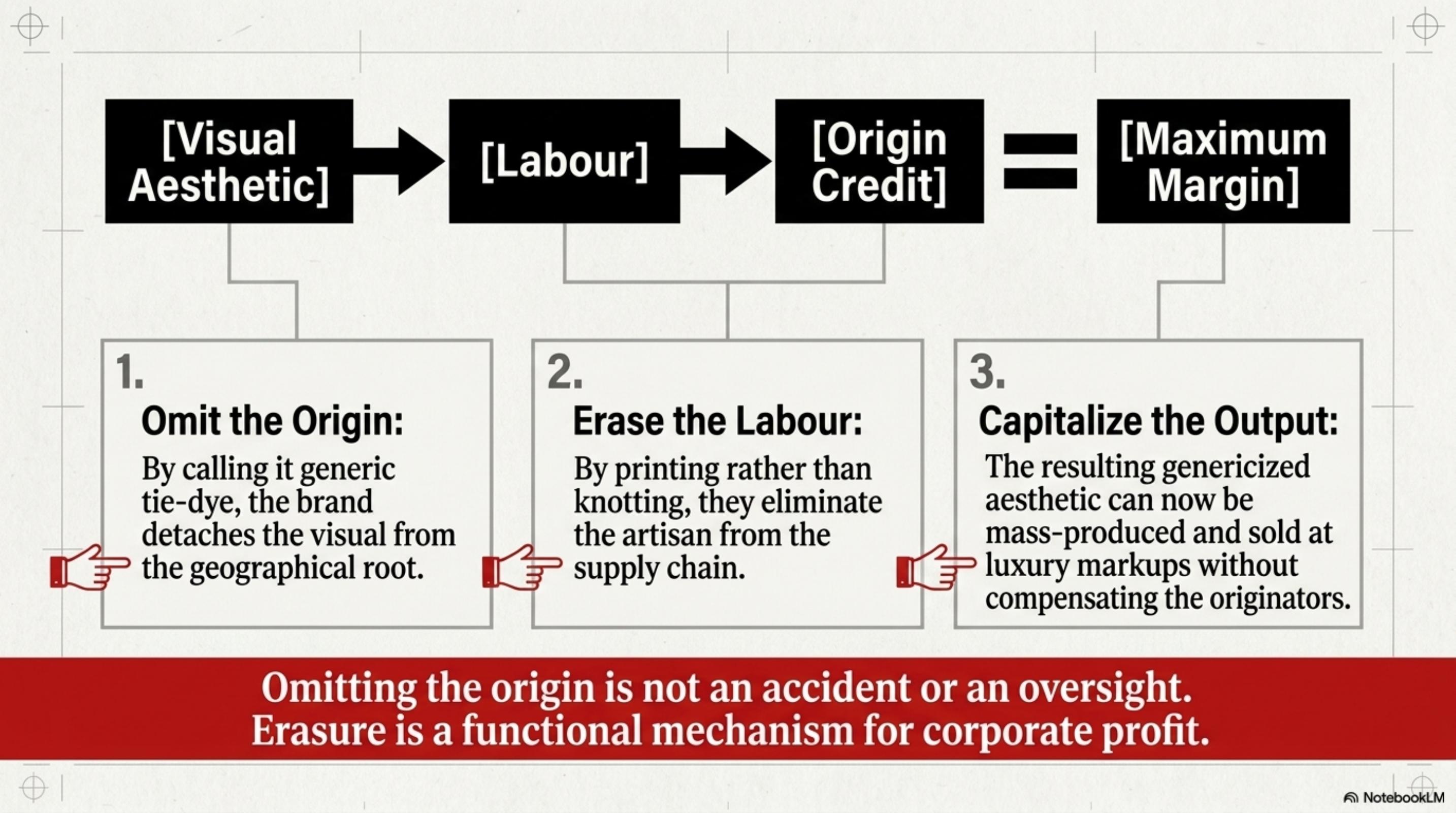
Ralph Lauren introduced a Printed Cotton Wrap Skirt featuring a pattern directly replicating the distinctive dot motifs of Bandhani. Marketed as 'resort-ready tie-dye,' the skirt retailed at a significantly higher price point than the traditional craft's value. The brand's product description and care label did not acknowledge the Indian origin of the design, presenting it as a generic 'tie-dye' aesthetic and detaching it from its cultural roots and the artisans who developed the technique.
बंधनी
Bandhani
- Region
- Gujarat & Rajasthan
- True Value
- ₹1,200≈ $14
- Category
- 01 · High Fashion
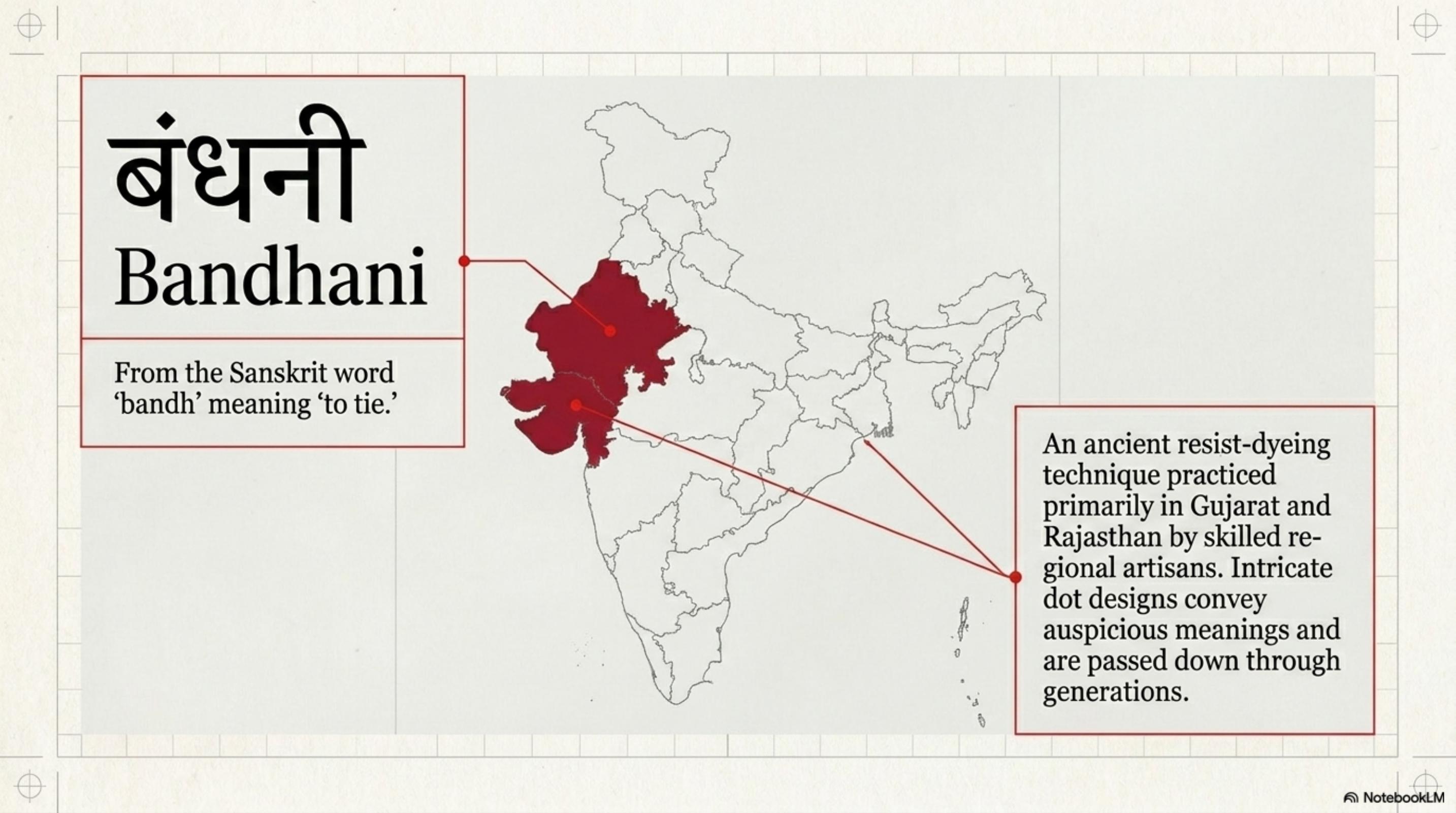
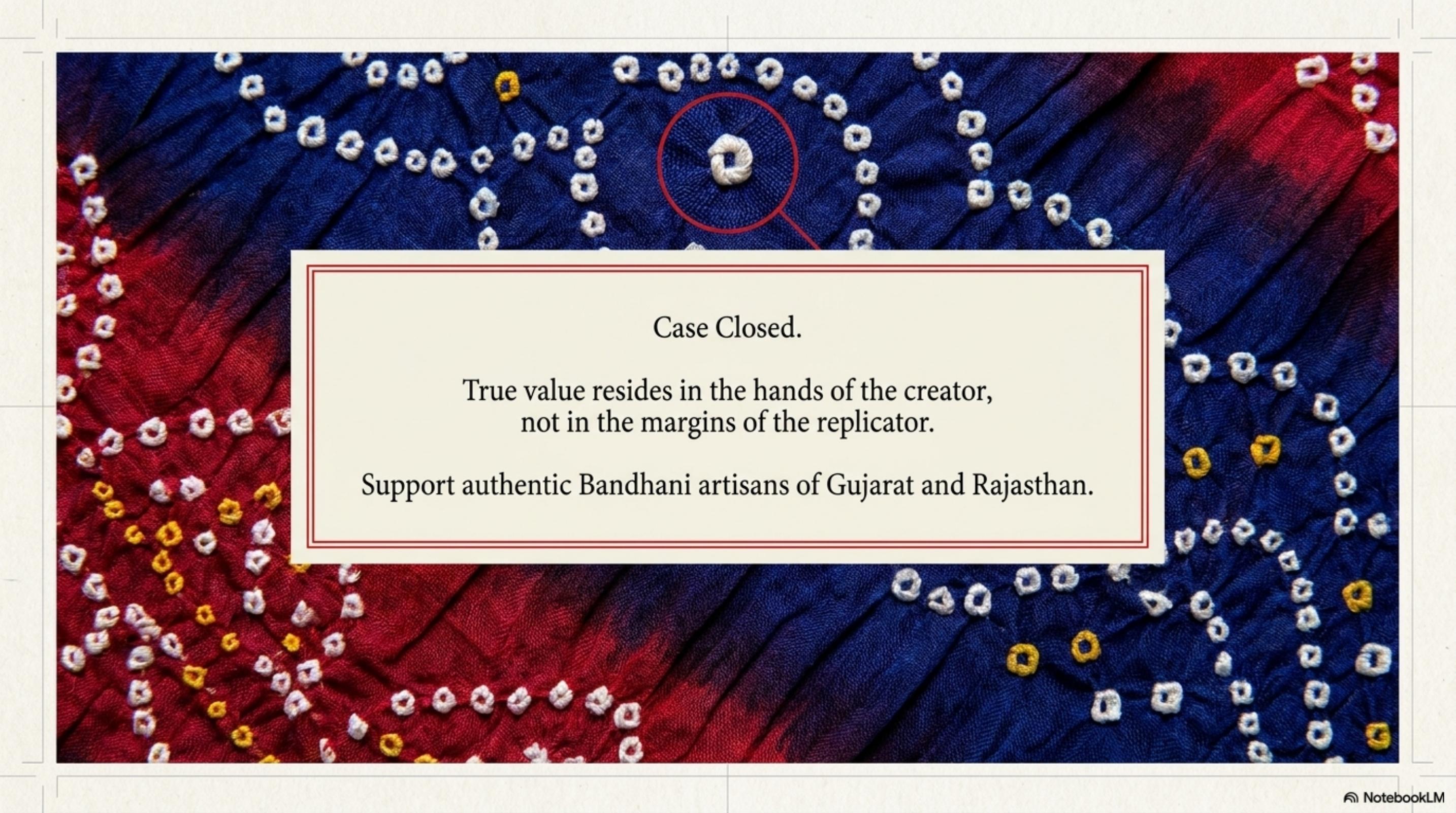
Bandhani, from the Sanskrit word 'bandh' meaning 'to tie,' is an ancient resist-dyeing technique practiced primarily in the Indian states of Gujarat and Rajasthan. Skilled artisans meticulously tie thousands of tiny knots on fabric, often silk or cotton, before dyeing. Each knot forms a resist, creating intricate patterns of dots and circles. This labor-intensive craft is a significant part of regional cultural identity, with designs often conveying auspicious meanings and passed down through generations.
FX reference: 1 USD ≈ ₹83 — for comparison only
The Story
In 2026, Ralph Lauren introduced a "Printed Cotton Wrap Skirt" for ₹44,800, marketed as "resort-ready tie-dye." The garment featured a pattern strikingly similar to traditional Indian Bandhani, a resist-dye technique. The skirt was sold without any indication of its cultural inspiration or origin on the care label.
Bandhani, or बंधनी, is an ancient resist-dyeing technique originating from the Indian states of Gujarat and Rajasthan. This intricate craft involves tying thousands of tiny knots on fabric to create patterns before dyeing, resulting in a distinctive dotted design. Traditionally practiced by skilled artisans, often women, Bandhani holds significant cultural value, frequently used in ceremonial attire and symbolizing auspiciousness and celebration within communities.
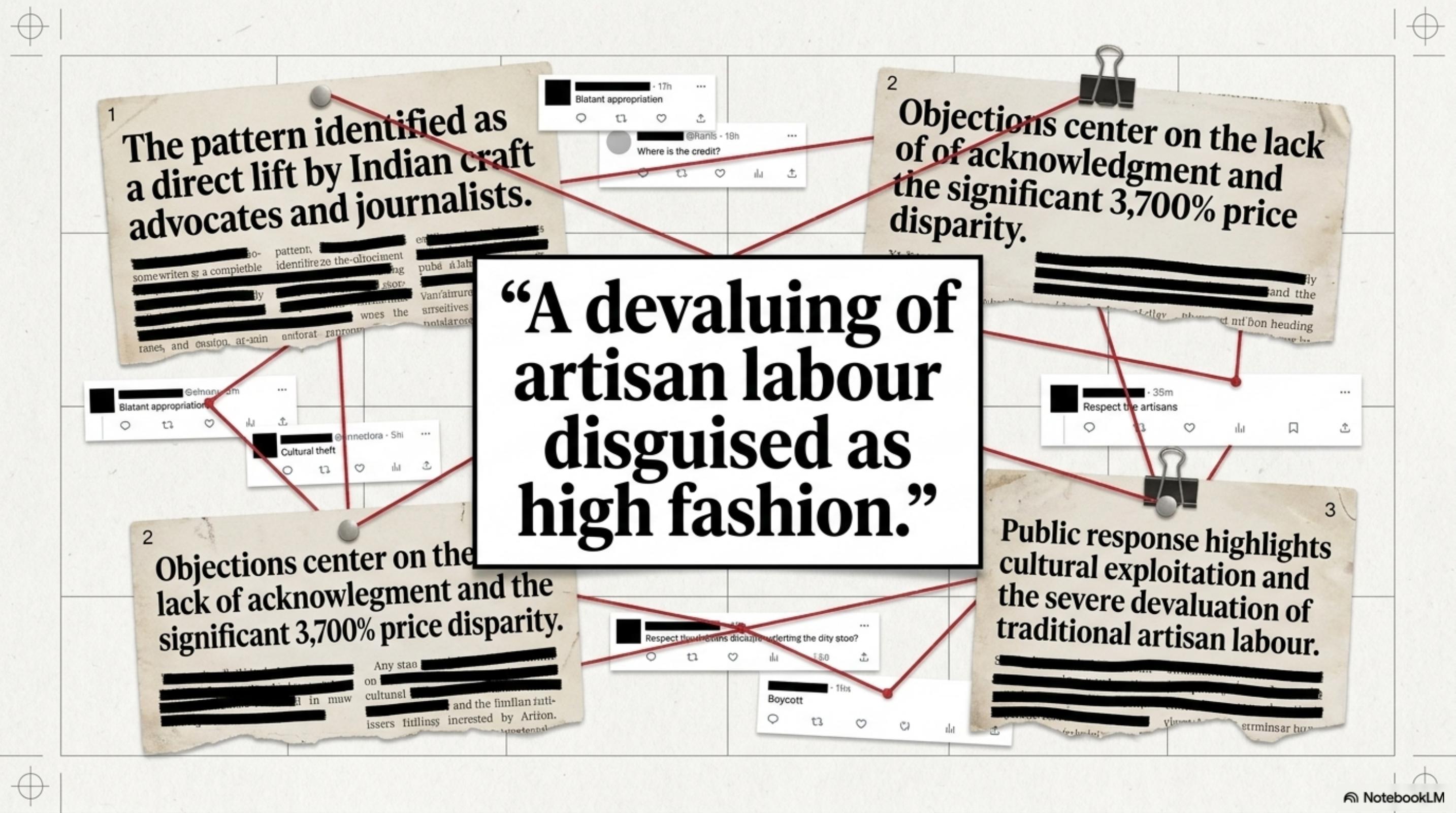
The appropriation was swiftly called out by Indian craft advocates and journalists who identified the pattern as a direct lift of the thousand-knot Bandhani resist-dye technique. Objections centered on the lack of acknowledgment for the craft's origin and the significant price disparity, with the skirt retailing for ₹44,800 while the fair value of an authentic Bandhani piece was estimated around ₹1,200. The public response highlighted concerns about cultural exploitation and the devaluation of traditional artisan labor.
The pattern is a direct lift of the thousand-knot Bandhani resist-dye technique. No origin tag on the care label.
The Dossier
A visual breakdown of the appropriation — the luxury spin, the artisanal reality, and the full evidence deck.
Reporting forthcoming